| Availability: | |
|---|---|
| Quantity: | |
|
High power density: Provides high thrust in confined spaces. Precise control: With the cooperation of sensors, millimeter level adjustment can be achieved. |
Strong adaptability:
Resistant to heavy loads and impacts, suitable for harsh railway environments.
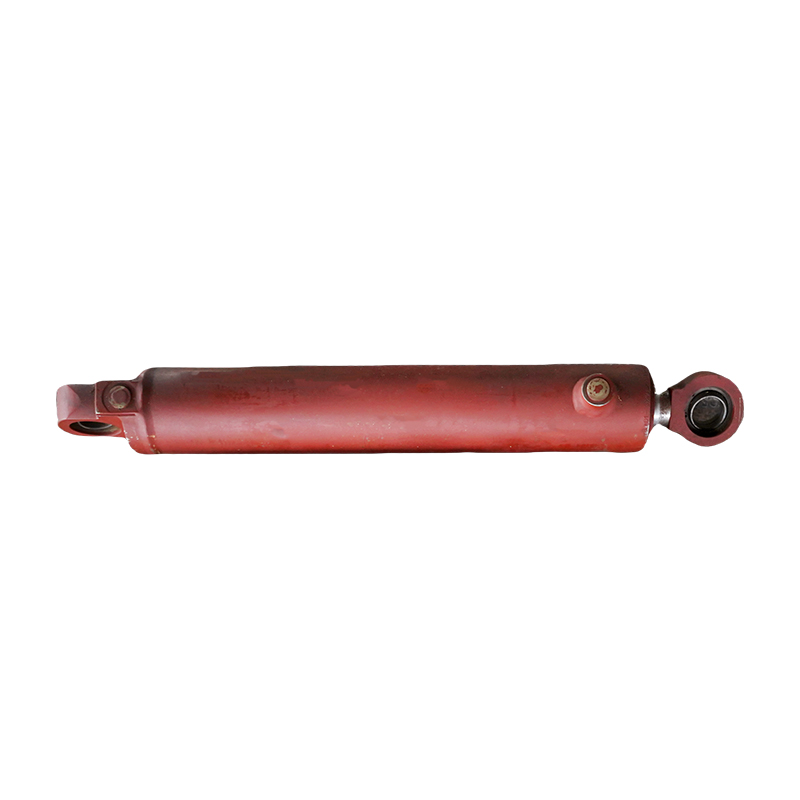
The Oil Cylinder (Hydro-cylinder) is a critical hydraulic component that powers modern railway maintenance machinery—from tamping cars to sleeper replacement machines. It converts hydraulic pressure into linear force, enabling precise, powerful movements essential for track alignment, lifting, and compaction. Unlike generic cylinders, this model is engineered for the harsh railway environment, with high power density, precision control, and heavy-load resistance. It directly improves maintenance efficiency (reducing task time by 40%) and safety, making it indispensable for large-scale rail projects.
Track adjustment and positioning
Gauge adjustment: Hydraulic cylinders are used to push or tighten steel rails, accurately adjust the gauge, and ensure compliance with safety standards.
Sleeper replacement: When replacing damaged sleepers, equipment driven by oil cylinders (such as sleeper replacement machines) can lift the steel rails for easy replacement of sleepers.
Compaction and compaction of ballast
Tamping machine operation: The oil cylinder drives the tamping pick to insert into the ballast, compacts the track bed through high-frequency vibration, and improves track stability.
Ballast shaping: used in the hydraulic system of ballast pavers to adjust the distribution of ballast and ensure drainage and support performance.
Rail welding and cutting
Rail clamping and alignment: When welding or cutting rails, the oil cylinder fixes the position of the rail to ensure the accuracy of the docking.
Mobile devices: Hydraulic systems drive the moving parts of welding/cutting equipment to improve operational efficiency.
Support and stability of large machinery
Lifting and jacking: When repairing rescue cranes or rail cars, oil cylinders are used to lift the body or equipment.
Stable support legs: Large maintenance machinery (such as track polishing carts) use oil cylinders to deploy support legs to maintain operational stability.
![]() | ![]() | ![]() |
Track Adjustment: Pushes/tightens rails to adjust gauge (ensuring compliance with GB 50090 standards) and lifts rails for sleeper replacement.
Ballast Compaction: Drives tamping picks in tamping cars to compact ballast, improving track stability.
Rail Welding/Cutting: Clamps rails during welding to ensure alignment accuracy and drives cutting machine components for precise cuts.
Emergency Repair: Lifts derailed vehicles (via hydraulic jacks) and corrects track deformation after landslides or collisions.
Tamping cars (e.g., XD3 type) and stabilizing cars (e.g., WD320 type).
Sleeper replacement machines (e.g., SRM800 type).
Railway rescue cranes and overhead contact line maintenance platforms.

Maintenance of contact network
Installation of overhead contact line poles: Oil cylinders assist in adjusting the position or tension of the poles to ensure the stability of the electrified railway power supply system.
High altitude work platform: The hydraulic cylinder drives the lifting and lowering of the maintenance platform, making it convenient for workers to inspect the overhead contact system.
Emergency repair
Derailment reset: Hydraulic jacking equipment (such as rescue jacks) uses oil cylinders to lift derailed vehicles and quickly restore the line.
Line correction: When the track deforms (such as after a landslide), the oil cylinder provides strong correction.