| Availability: | |
|---|---|
| Quantity: | |
|
1. More sleepers can be tamped per hour, significantly improving line maintenance efficiency; Shorten the time of lifting, lowering and clamping, reduce the operation interval and realize fast operation cycle. |
2. High vibration force and penetration force ensure ballast compaction, enhancing track stability.
3. Compared to traditional large tamping machines, the host machine is more compact and lighter, offers greater ease of track access, and reduces labor intensity.
• High-Efficiency Tamping Performance: With a vibration frequency of 60–67Hz and penetration force of 8kN per tamping pick, the machine compacts ballast quickly and thoroughly. It can tamp 120 sleepers per hour—3x faster than manual tamping—significantly reducing track occupancy time.
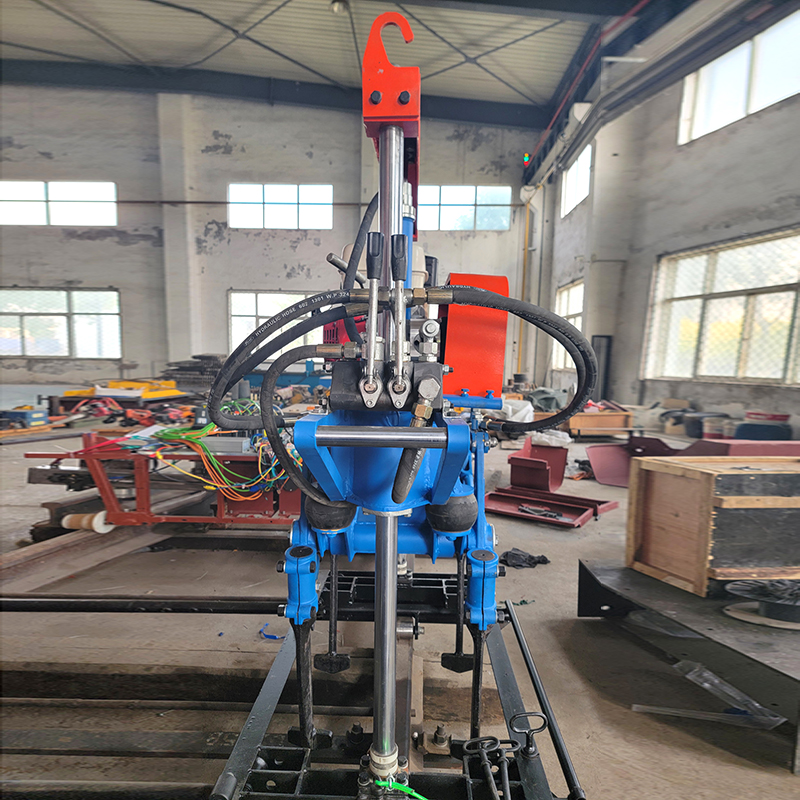
• Compact & Lightweight Design: Measuring 1450 × 700 × 1650mm and weighing only 395kg, the machine is easy to transport and operate in narrow spaces (e.g., under overhead lines or in tunnels). It can be lifted by a small crane or mounted on a maintenance vehicle for quick deployment.
• Customizable Rail Gauge Support: The machine supports standard gauges (1435mm, 1520mm) and offers custom modifications for narrow-gauge (e.g., 1067mm) or broad-gauge (e.g., 1676mm) railways. This flexibility makes it suitable for global railway networks.
• Reliable Hydraulic System: Powered by a 9.6kW electric motor, the hydraulic system delivers consistent vibration and lifting force (up to 10kN). It features a pressure protection valve that prevents damage from overloading, ensuring long-term reliability.
• Operator-Friendly Design: The machine has an ergonomic handle with vibration damping, reducing operator fatigue during long shifts. It also includes a digital display showing tamping frequency, penetration depth, and operating time for easy monitoring.
How many operators are needed to use this tamping machine?
Only 1 operator is required. The machine’s intuitive controls and lightweight design allow a single person to position it, adjust settings, and perform tamping. For large-scale projects (e.g., tamping 1km of track), we recommend 2 operators to alternate shifts, maximizing efficiency.
Can the machine work with different types of ballast (e.g., granite, limestone)?
Yes. The machine’s vibration frequency (60–67Hz) is adjustable to match different ballast materials. For harder ballast (e.g., granite), a higher frequency (65–67Hz) ensures optimal compaction; for softer ballast (e.g., limestone), a lower frequency (60–62Hz) prevents ballast crushing.
What is the maintenance cost of this machine compared to traditional large tamping machines?
The maintenance cost is 60% lower than large, self-propelled tamping machines. Routine maintenance (e.g., oil changes, filter replacements) costs ~$200 per year, and major components (e.g., hydraulic pump) have a service life of 5,000+ hours. Additionally, its compact size eliminates the need for expensive transport or heavy lifting equipment.
|
1. More sleepers can be tamped per hour, significantly improving line maintenance efficiency; Shorten the time of lifting, lowering and clamping, reduce the operation interval and realize fast operation cycle. |
2. High vibration force and penetration force ensure ballast compaction, enhancing track stability.
3. Compared to traditional large tamping machines, the host machine is more compact and lighter, offers greater ease of track access, and reduces labor intensity.
• High-Efficiency Tamping Performance: With a vibration frequency of 60–67Hz and penetration force of 8kN per tamping pick, the machine compacts ballast quickly and thoroughly. It can tamp 120 sleepers per hour—3x faster than manual tamping—significantly reducing track occupancy time.
• Compact & Lightweight Design: Measuring 1450 × 700 × 1650mm and weighing only 395kg, the machine is easy to transport and operate in narrow spaces (e.g., under overhead lines or in tunnels). It can be lifted by a small crane or mounted on a maintenance vehicle for quick deployment.
• Customizable Rail Gauge Support: The machine supports standard gauges (1435mm, 1520mm) and offers custom modifications for narrow-gauge (e.g., 1067mm) or broad-gauge (e.g., 1676mm) railways. This flexibility makes it suitable for global railway networks.
• Reliable Hydraulic System: Powered by a 9.6kW electric motor, the hydraulic system delivers consistent vibration and lifting force (up to 10kN). It features a pressure protection valve that prevents damage from overloading, ensuring long-term reliability.
• Operator-Friendly Design: The machine has an ergonomic handle with vibration damping, reducing operator fatigue during long shifts. It also includes a digital display showing tamping frequency, penetration depth, and operating time for easy monitoring.
How many operators are needed to use this tamping machine?
Only 1 operator is required. The machine’s intuitive controls and lightweight design allow a single person to position it, adjust settings, and perform tamping. For large-scale projects (e.g., tamping 1km of track), we recommend 2 operators to alternate shifts, maximizing efficiency.
Can the machine work with different types of ballast (e.g., granite, limestone)?
Yes. The machine’s vibration frequency (60–67Hz) is adjustable to match different ballast materials. For harder ballast (e.g., granite), a higher frequency (65–67Hz) ensures optimal compaction; for softer ballast (e.g., limestone), a lower frequency (60–62Hz) prevents ballast crushing.
What is the maintenance cost of this machine compared to traditional large tamping machines?
The maintenance cost is 60% lower than large, self-propelled tamping machines. Routine maintenance (e.g., oil changes, filter replacements) costs ~$200 per year, and major components (e.g., hydraulic pump) have a service life of 5,000+ hours. Additionally, its compact size eliminates the need for expensive transport or heavy lifting equipment.
The Hydraulic Line Tamping Machine is a game-changer in railway track maintenance, designed to compact ballast efficiently and precisely— the foundation of stable, safe rail operations. Ballast degradation (e.g., loosening, settlement) is a leading cause of track misalignment, which increases train vibration, wear on wheels and rails, and even safety risks. This machine uses advanced hydraulic technology to deliver high-frequency vibration, compacting ballast to optimal density (≥1.7g/cm³) while minimizing damage to the track bed. Its core selling points include unmatched efficiency (tamping up to 120 sleepers per hour), compact design (ideal for narrow workspaces), and customizable rail gauge support. For railway operators, this means faster maintenance, longer track service life, and reduced long-term costs compared to traditional manual or low-powered tamping tools.
| Overall Dimensions | 1450 × 700 × 1650mm |
| Total Weight | 395kg |
| Power | 9.6kW |
| Vibration Frequency | 60 ~ 67Hz |
| Applicable Track Gauge | Customized adaptation supported. Customized product services are available according to your needs. |
![]() | ![]() | ![]() |
The Hydraulic Line Tamping Machine is a game-changer in railway track maintenance, designed to compact ballast efficiently and precisely— the foundation of stable, safe rail operations. Ballast degradation (e.g., loosening, settlement) is a leading cause of track misalignment, which increases train vibration, wear on wheels and rails, and even safety risks. This machine uses advanced hydraulic technology to deliver high-frequency vibration, compacting ballast to optimal density (≥1.7g/cm³) while minimizing damage to the track bed. Its core selling points include unmatched efficiency (tamping up to 120 sleepers per hour), compact design (ideal for narrow workspaces), and customizable rail gauge support. For railway operators, this means faster maintenance, longer track service life, and reduced long-term costs compared to traditional manual or low-powered tamping tools.
| Overall Dimensions | 1450 × 700 × 1650mm |
| Total Weight | 395kg |
| Power | 9.6kW |
| Vibration Frequency | 60 ~ 67Hz |
| Applicable Track Gauge | Customized adaptation supported. Customized product services are available according to your needs. |
![]() | ![]() | ![]() |
• New Railway Construction: Used in the final phase of track laying to compact ballast for the first time, ensuring the track bed meets engineering standards (density ≥1.7g/cm³) before opening to traffic.
• Routine Track Maintenance: Performs periodic ballast compaction (every 6–12 months) to counteract settlement caused by train loads, maintaining track alignment and stability.
• Defect Repair: Targets areas with loose ballast (e.g., after heavy rain or track repairs) to fix settlement, uneven sleepers, or gauge deviation—preventing more serious issues like derailment.
• Urban & Regional Railways: Ideal for commuter lines or tram tracks, where space is limited and maintenance must be completed quickly (e.g., overnight) to avoid disrupting daily operations.
| | ![]() |
Specific usage scenarios: New construction and laying of railway lines: Perform initial tamping on the ballast layer of the newly built railway line to ensure the compactness of the subgrade meets engineering standards. | Specific usage scenarios: Routine maintenance and overhaul of existing lines. |
Periodic tamping operations to maintain the elasticity and stability of the ballast bed;
Defect repair (such as track settlement, loose ballast treatment) and ballast strengthening and compaction during line overhaul.
• New Railway Construction: Used in the final phase of track laying to compact ballast for the first time, ensuring the track bed meets engineering standards (density ≥1.7g/cm³) before opening to traffic.
• Routine Track Maintenance: Performs periodic ballast compaction (every 6–12 months) to counteract settlement caused by train loads, maintaining track alignment and stability.
• Defect Repair: Targets areas with loose ballast (e.g., after heavy rain or track repairs) to fix settlement, uneven sleepers, or gauge deviation—preventing more serious issues like derailment.
• Urban & Regional Railways: Ideal for commuter lines or tram tracks, where space is limited and maintenance must be completed quickly (e.g., overnight) to avoid disrupting daily operations.
| | ![]() |
Specific usage scenarios: New construction and laying of railway lines: Perform initial tamping on the ballast layer of the newly built railway line to ensure the compactness of the subgrade meets engineering standards. | Specific usage scenarios: Routine maintenance and overhaul of existing lines. |
Periodic tamping operations to maintain the elasticity and stability of the ballast bed;
Defect repair (such as track settlement, loose ballast treatment) and ballast strengthening and compaction during line overhaul.