
close
Choose Your Site
Global
Social Media


Views: 0 Author: Site Editor Publish Time: 2026-04-07 Origin: Site


In professional fabrication—whether sizing architectural wood panels, cutting delicate veneers, or severing heavy-duty steel rails—the margin for error is non-existent. Relying on manual two-point measurement, miscalibrated depth stops, or mismatched blades introduces massive human error. Slight deviations in angle, poor track alignment, or blade deflection compound over distance. This leads to irreversible material waste and compromised structural integrity. The friction between setup time and execution accuracy consistently drains project profitability, especially for solo operators handling oversized materials. Achieving zero-tolerance cuts requires abandoning isolated tools in favor of a unified approach. This guide breaks down hardware calibration, blade metallurgy, alignment workflows, and ecosystem integration necessary to standardize precision in both panel-processing and industrial Rail Sawing operations. We will examine systematic solutions that guarantee absolute repeatability.
Systematic Alignment Defeats Manual Measurement: Integrating CNC-machined guide rail squares eliminates the error-prone "measure twice, mark twice" method, securing absolute 90-degree cuts with a single reference point and zero dual clamping.
Material Dictates Machine Parameters: True precision requires exact matching of blade metallurgy (TCT vs. HSS), tooth count (TPI), kerf thickness, and RPM to the material—spanning fine woodworking to high-density heavy-duty metal sawing.
Depth and Track Calculations Are Critical: Factoring in track thickness to set the blade depth precisely 6mm below the material surface, and properly executing the initial splinter guard cut, are non-negotiable for tear-out-free results and kickback prevention.
Ecosystem Integration Drives ROI: Utilizing standardized work tables (such as the 96mm/20mm MFT standard with Parf guide geometry), parallel guides, and self-centering bench dogs transforms portable rail saws into ecosystems that outcompete stationary industrial equipment in accuracy, repeatability, and footprint.
The overarching term encompassing track-guided cutting applies to two distinct professional domains. While they require vastly different machinery profiles, they share identical mandates for micro-tolerance alignment and material stability. Equipment misapplication remains a primary source of precision loss in fabrication environments. A woodworking track saw will instantly burn out against industrial steel, just as a heavy track cutter will destroy delicate veneers. You must isolate the mechanical requirements, torque profiles, and accessory ecosystems of your specific domain before configuring the hardware. Attempting to cross-pollinate tools between these distinct disciplines leads to catastrophic equipment failure and severe safety hazards.
This domain focuses strictly on eliminating tear-out on delicate veneers, high-pressure laminates (HPL), melamine, and premium Baltic birch plywood. Operators must maintain unwavering straightness over 4x8 sheet goods to ensure cabinets and architectural elements assemble without visible gaps. Executing flawless joinery relies on lightweight, extruded aluminum tracks designed to interlock precisely with the saw's base plate. This ecosystem extends far beyond simple circular saws. Modern professional setups integrate woodworking routers onto the same track extrusions. This allows operators to execute precise dados, stopped grooves, and trenching across large panels with complete repeatability. The primary challenge here is managing dust extraction, preventing surface splintering, and maintaining squareness over distances exceeding 2400mm.
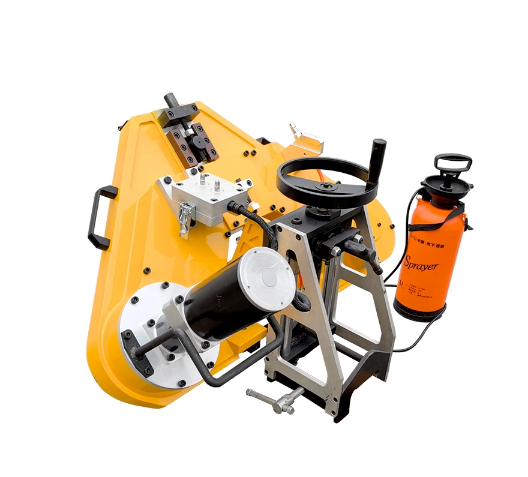
In contrast, the structural steel severing domain demands raw torque, specialized thermal management, and exceptional mass stabilization. Operators rely on heavy equipment like a cordless Lithium battery rail sawing machine to execute clean, perpendicular cuts in high-density metals. The operational goal is to sever railway tracks, structural I-beams, or thick metal plating without inducing thermal distortion, work-hardening the metal, or glazing the cutting blade. This requires completely different clamp mechanics and track profiles designed to withstand extreme vibration. Often, operators pair the primary cutter with a rail sawing and drilling machine to complete structural joint preparations on site. This ensures that the newly severed edge perfectly aligns with the bolt holes required for joining structural steel components.
A precision cut relies entirely on the interplay between the saw base and the track extrusion. Choosing the correct platform dictates the maximum achievable tolerance for your entire workflow.
OEM Integrated Tracks: Dedicated plunge saws mated perfectly to their original equipment manufacturer extrusions offer maximum precision. The base plate channels match the track ribbing precisely. High-end models feature adjustable cam mechanisms that allow the operator to dial out any lateral play between the saw and the rail, ensuring a tolerance of 0.1mm over a full track length.
Generic Sled Platforms: Aftermarket adapters convert standard circular saws into track saws. While cost-effective for rough framing, they introduce major blindspots for fine fabrication. Generic carriages fail to accommodate worm drive saws. They also frequently block saws featuring bulky plastic blade guards. This physical misalignment causes tracking errors. The lack of a true plunge mechanism on standard circular saws also forces the operator to drag the blade guard across the workpiece, risking surface damage and rendering them insufficient for strict professional tolerances.
Conventional sheet cutting requires measuring and marking both ends of a large panel. Connecting these dots magnifies microscopic marking errors over long distances. The traditional "measure twice, cut once" mantra becomes an inherent liability when seeking tight tolerances for frameless cabinetry or precision metal enclosures. If you misread the tape measure by half a millimeter on one end, a diagonal skew develops across the full length of the sheet. This ruins squareness and complicates all subsequent assembly steps, forcing operators to use excessive clamping force to close gapping joints.
Attaching a dedicated track square instantly transforms the rail into a massive, unyielding T-square. Setup reduces drastically to three definitive steps. First, measure and mark your dimension on one single side of the board. Second, slide the squared rail until the cut line aligns perfectly with your single mark. Finally, execute the 90-degree cut. This methodology completely removes the need for dual-end measurement. It eliminates complex track clamping and accelerates production speed while practically eliminating human measurement error.
Not all guide rail squares deliver industrial reliability. Market saturation offers various designs, but true precision demands rigorous engineering standards. Professionals must evaluate manufacturing materials and structural geometry before trusting a square with expensive sheet stock. A square that deflects under pressure will transfer that deflection directly into your workpiece.
Look strictly for aerospace-grade materials. Premium squares utilize 6082 high-strength aluminum, a material commonly found in structural trusses, aerospace engineering, and high-load marine applications. Manufacturers use CNC precision milling alongside coordinate measuring machine (CMM) probe verification systems to guarantee an alignment tolerance between 0.005 and 0.007 degrees. This extreme manufacturing standard ensures an absolute 90-degree reference edge every single time you lock it onto the extrusion.
You must carefully balance weight against durability when configuring track accessories. A heavy stainless steel square feels highly durable. However, it introduces a significant operational hazard. It makes the track severely top-heavy on the overhang side. This imbalance causes the guide rail to tip, bounce, or physically lift off the material during a cut. Premium aluminum offers the exact lightweight rigidity necessary to maintain flat, stable material contact. Additionally, favor single-piece, zero-adjust designs. They eliminate the risk of moving parts losing calibration over time due to mechanical wear, high-frequency workshop vibration, or operator mishandling.
Batch processing cabinet parts, architectural paneling, or repetitive metal shelving demands uniform dimensions. Hand-measuring fifty consecutive cuts invites unacceptable dimensional drift. Utilizing generation-two parallel guide systems transforms the workflow. These modular attachments lock directly onto the track and hook over the rear edge of the workpiece.
Parallel guides feature dual-dimension metric and imperial scales equipped with micro-adjustable flip stops. Operators lock in the exact cut-to-edge distance once. You then slide the track assembly across the board until the stops register firmly against the rear edge, guaranteeing absolute parallel accuracy across hundreds of repetitions. The benefits of this system are substantial:
Eliminates the need to measure individual parts during a batch run.
Guarantees that opposing sides of a cabinet carcass are mathematically identical.
Reduces cognitive load and fatigue on the operator during long shifts.
Effectively replaces the massive footprint and massive capital expenditure of a traditional sliding table saw.
Heavy metal applications require fundamentally different power delivery systems. High-density steel immediately punishes weak motors and flimsy track bases. High-voltage lithium systems provide the massive torque output necessary for continuous high-density cutting. Advanced battery platforms, specifically those utilizing 8Ah to 12Ah high-discharge cells, deliver sustained amperage to brushless motors. Brushless stators monitor resistance at the blade and electronically adjust power delivery to maintain consistent RPM under heavy load. This prevents the blade from stalling, which can shatter carbide teeth against dense steel.
Deploying a combined machine approach streamlines the workflow. Professional railway and structural crews often utilize multi-function stations for complete joint preparation. This methodology dramatically reduces the equipment footprint on active, dangerous job sites. Integrating drilling and sawing into a unified cordless workflow ensures that bolt-hole alignments remain flawlessly parallel to the freshly cut steel face, preventing structural weak points, stress fractures, and sheer-load failures during final assembly.
Applying the wrong blade physics destroys the material, overheats the motor, and presents a severe safety hazard from flying shrapnel. High precision mandates an evidence-based matching framework based on metallurgy, tooth geometry, and rotation speed. You cannot apply woodworking parameters to metal extrusion operations. Tooth geometry, specifically the difference between Alternate Top Bevel (ATB) and Triple Chip Grind (TCG), dictates how the blade interacts with the material's molecular structure.
| Material Application | Blade Composition | Tooth Profile | Teeth Per Inch (TPI) | Optimal Speed (RPM) |
|---|---|---|---|---|
| Wood, Veneer & HPL Panels | Tungsten Carbide Tipped (TCT) | Alternate Top Bevel (ATB) | 40 - 60 TPI | High (4500 - 5500 RPM) |
| Aluminum & Non-Ferrous Extrusions | Specialized TCT | Triple Chip Grind (TCG) | ~72 TPI | Medium (~4000 RPM) |
| Structural Steel & Railway Tracks | Cermet or Diamond Coated | Modified TCG / Flat Top | 30 - 40 TPI | Low (2800 - 3000 RPM) |
Wood applications require a high tooth count, ATB geometry, and high RPM to ensure a clean finish, sever wood fibers cleanly, and provide rapid chip clearing. Aluminum demands a specialized 72 TPI profile with a 1.0mm thickness and a negative rake angle to deliver a smooth, burr-free edge without grabbing the extrusion. Heavy steel requires an entirely different approach. You must lower the RPM to prevent thermal overload, work hardening, and blade glazing. Utilize robust 2.0mm+ thick blades with specialized Cermet (ceramic-metal composite) or diamond coatings to handle the extreme density of structural railway steel. Operating at low RPM allows the heavy chips to carry the heat away from the cut, protecting the temper of the blade.
Work Surface Standardization (The Parf System): Absolute accuracy starts directly at the base. An uneven table twists the track, destroying cut straightness and causing the saw to bind. Utilize the Pythagorean theorem-based Parf guide system to construct your surface. This system allows you to drill a flawless 96mm center-to-center array of 20mm diameter holes with a tolerance below 0.1mm. Validate the table's absolute perpendicularity using precision CNC-milled triangles before placing any material on the deck.
Modular Work Holding: Once the grid is established, insert CNC-machined, self-centering bench dogs into the 20mm holes. Use varying dog heights to securely lock materials perfectly square to your grid. Elevate the track slightly above the work surface using specialized track clips when necessary to clear mechanical clamps hidden underneath the panel.
Guide Rail Extensions for Solo Operators: Sizing full 4x8 panels requires long continuous cuts. Solo workers must use rail extensions to avoid dangerous mid-cut repositioning. Use precision self-aligning connectors featuring expanding mandrels. Always follow a strict sequence: measure the cut, physically support the joint underneath with a flat block, align the connector bars, and tighten the set screws evenly in an alternating pattern. Finally, verify the rail joint with a premium straight-edge to guarantee a seamless, non-binding transition.
Anti-Slip and Positive Clamping: Understand your friction limits. The track features built-in neoprene friction strips underneath. On clean plywood or melamine, these strips often provide sufficient holding power without clamps. However, when cutting smooth metals, heavily textured materials, or working on steep angles, positive mechanical clamping becomes mandatory. Ratcheting track clamps lock the track securely to the workpiece, maintaining operator safety and strict tracking stability against heavy motor torque.
The First Cut (Splinter Guard Calibration): A brand new track requires immediate physical calibration to the specific saw. The anti-splinter strip initially overhangs the cut line by several millimeters. Secure the track to a flat scrap board. Dial the saw to maximum RPM, plunge into the waste board, and make a continuous, smooth pass to trim this oversized rubber strip down to the exact kerf of your saw blade. This creates a true, customized zero-clearance reference edge that physically holds down delicate surface fibers and prevents material tearing.
Calculating the 6mm Plunge Depth: Never guess your plunge depth. Plunging too deep alters the physics of the cut, causing dangerous kickback and excessive motor strain. You must account for the thickness of the guide rail itself. Measure your material thickness with calipers, add the rail thickness (typically 5mm), then set the blade depth stop to protrude exactly 6mm below the bottom face of the workpiece. This specific geometric intersection optimizes the tooth entry and exit angles. It eliminates tear-out on delicate veneers and significantly reduces the thermal load on the motor.
Smooth Propulsion: Precision relies on steady momentum and consistent chip load. Maintain uniform forward pressure throughout the entire cut length. Pausing, stuttering, or forcing the blade forward aggressively during the plunge invites ugly burn marks, edge scoring, and blade deflection. Listen closely to the motor pitch; let the motor maintain its engineered RPM without physically forcing the feed rate beyond its cutting capacity.
Industrial panel processing traditionally relied on massive stationary machinery. However, assessing the total cost of ownership reveals distinct financial and logistical advantages for modular track ecosystems. A premium modular track ecosystem provides stationary-grade straightness in a fraction of the real estate. It easily transitions directly from the confined workshop to an active, remote job site, providing unparalleled operational flexibility.
| Operational Metric | Stationary Industrial Panel Saw | Modular Track Ecosystem |
|---|---|---|
| Capital Expenditure | High ($15,000 - $35,000) | Low ($1,500 - $3,000) |
| Space Requirements | Massive (~300 sq. ft. clearance) | Minimal (Easily stored vertically) |
| Power Infrastructure | 3-Phase 400V Wiring Required | Standard 110V/220V or Cordless Battery |
| Material Handling | Requires multiple operators to feed sheets | Tool moves over material (Solo operator friendly) |
The financial trade-offs strongly favor the track system for most fabricators. The initial capital expenditure for a premium plunge saw, high-tolerance guide square, parallel guide system, and MFT table remains drastically lower than a stationary industrial panel saw. You avoid exorbitant freight shipping fees, complex calibration rigging by hired technicians, and specialized 3-phase power installations. Material yield savings further accelerate your return on investment. Eliminating the two-point measurement error and achieving zero tear-out prevents the catastrophic spoilage of highly expensive sheet goods, exotic veneers, or specialized industrial metals.
High-torque cutting inherently carries risk. Kickback occurs violently when the saw binds inside the kerf, transferring rotational energy backward into the machine and throwing the saw out of the track. You can mitigate this entirely by ensuring absolute track straightness, preventing the blade from pinching. Employ the proper riving knife deployment, which keeps the kerf open behind the blade, and strictly adhere to the calculated 6mm depth-setting rule to limit tooth bite.
Mandate strict pre-operation checklists across your fabrication team. Always verify blade lock-nut tightness with a calibrated wrench before applying power. Inspect the smooth, unhindered function of plunge posts and heavy-duty spring returns. Ensure all anti-kickback cams on the track base are actively engaged before plunging. Maintain robust, active HEPA dust extraction. Clearing debris keeps your line-of-sight visible, prevents track clogging, and protects respiratory health. Strictly enforce appropriate personal protective equipment (PPE), particularly when processing dense industrial metals that produce high-velocity shrapnel and intense sparks.
Precision degrades silently over time through friction, heat, and ambient workshop vibration. You must actively manage your equipment's wear patterns to maintain the tight engineering tolerances established on day one. Neglecting maintenance inevitably leads to sloppy cuts, ruined materials, and compromised joint integrity.
Consumable management dictates finish quality. Track the physical degradation of the anti-splinter rubber strip and the bottom neoprene friction pads. Replace them the moment you observe micro-tear-out on crosscuts or experience the track slipping sideways during operation. Trimming a fresh splinter guard immediately restores your zero-clearance edge to factory perfection, preventing costly rework.
Hardware upkeep requires consistent workshop discipline. Regularly clear pitch, resin buildup, and micro metal shavings from the aluminum rail extrusion grooves using mineral spirits. Use specialized dry PTFE lubricants on saw plunge mechanisms and base plate channels to prevent binding; never use wet silicone sprays that attract dust. Regularly re-torque all parallel guide fasteners, extension connector set screws, and square alignment bolts. This routine prevents vibrational loosening and maintains sub-millimeter reliability across years of heavy, professional usage.
Audit your current workflow to identify specific measurement bottlenecks and manual marking errors.
Establish an MFT-standard base track system featuring a 96mm/20mm hole grid for absolute reference.
Integrate a CNC-milled 6082-aluminum guide rail square to permanently eliminate dual-measurement alignment risks.
Calibrate all saw blades to ensure exact matching of TPI, metallurgy, and RPM to your specific cutting materials.
A: A standard combination square relies on hand pressure to reference a board's edge for marking pencil lines. A guide rail square mechanically locks directly onto the track extrusion itself. This turns the entire cutting rail into a massive, unyielding 90-degree reference edge. You can align and cut simultaneously without pre-drawing long lines across the whole panel, eliminating manual marking deviations entirely.
A: Splintering primarily occurs for three reasons. First, your rubber anti-splinter strip is worn out and no longer provides a zero-clearance reference support. Second, your plunge depth is incorrect. You must set the blade to plunge exactly 6mm below the material surface for the optimal exit angle. Third, you are using a low tooth count blade with an incorrect grind profile.
A: Tipping is caused by excessive overhang weight pulling the track off the material. Avoid using heavy stainless steel guide squares, as they shift the center of gravity drastically. Instead, switch to an aerospace-grade 6082 aluminum square. It provides extreme rigidity while keeping the track lightweight, perfectly balanced, and completely flat against the workpiece surface.
A: Yes. Modern high-voltage lithium battery systems generate massive, sustained torque that matches traditional corded counterparts. When you pair brushless motor technology with the correct low-RPM settings and a thick, high-quality TCG diamond-coated blade, they continuously sever heavy steel rails without thermal overload. They also provide necessary job site mobility for remote locations.
A: Measure the exact thickness of your workpiece using calipers or a precision tape. Add the physical thickness of your aluminum guide rail base. Finally, add exactly 6mm to that combined total. Setting the blade to protrude precisely 6mm below the material optimizes the tooth entry angle, drastically reducing motor strain and preventing dangerous kickback.
A: No. While stainless steel is highly resistant to impact damage, it is far too heavy for optimal track balance. The excess mass causes the rail system to tip backward over the edge of the material, lifting the cutting path. CNC-milled aerospace aluminum provides superior strength without disrupting the operational balance of the track.
A: Generic sled adapters lack strict dimensional tolerances, introducing lateral play that ruins straightness. They frequently fail to accommodate worm drive designs or saws with bulky plastic blade guards. This physical interference prevents the saw from riding smoothly along the extrusion. Plunge saws are specifically engineered to interface directly with their native tracks for absolute precision.


