
close
Choose Your Site
Global
Social Media


Views: 0 Author: Site Editor Publish Time: 2025-10-27 Origin: Site


Railway tracks endure immense stress daily. Have you ever wondered how they remain smooth and safe? Rail grinding machines play a crucial role. These machines restore track profiles, ensuring optimal performance. In this post, you'll learn about rail grinding machines and their importance in railway maintenance, enhancing safety and ride quality.
Rail grinding is a maintenance process used to restore the shape and surface of railway tracks. Over time, rails develop defects such as wear, corrugation, cracks, and other irregularities caused by constant friction between train wheels and the rail surface. These defects can lead to rough rides, increased noise, and even safety risks. Rail grinding removes these imperfections by precisely cutting away fatigued metal and restoring the rail’s optimal profile. This process extends the life of the rails and improves the overall performance of the railway system.
The purpose of rail grinding includes:
Removing surface defects like spalling, shelling, and plastic flow.
Restoring the railhead to its ideal shape for better wheel-rail contact.
Reducing noise and vibration caused by rail corrugation.
Preventing further damage by controlling rolling contact fatigue.
Enhancing ride quality and passenger comfort.
Rail grinding can be preventive or corrective. Preventive grinding happens before defects become severe, stopping damage from progressing. Corrective grinding fixes existing defects to restore the rail’s condition.
Rail grinders have evolved significantly since their early use in the early 20th century. Initially, rail maintenance relied on manual tools and simple machines. Over time, specialized rail grinding trains and vehicles were developed to handle large-scale track maintenance efficiently.
Key milestones in rail grinder development include:
Early 1900s: Introduction of basic rail grinding machines for removing surface irregularities.
Mid-20th century: Development of self-propelled rail grinding trains equipped with multiple grinding stones.
Late 20th century: Incorporation of computer-controlled grinding systems enabling precise rail profiling.
Early 2000s: Introduction of rail milling technology, which offers even more accurate rail surface restoration.
Recent years: Advancements in high-speed grinding technology allow grinding at speeds up to 80 km/h, minimizing disruption to rail traffic.
Modern rail grinders often feature laser measurement systems that assess rail profiles before and after grinding. This technology helps operators maintain consistent rail shapes and optimize grinding schedules.
Overall, rail grinding technology has shifted from reactive repairs to proactive maintenance, focusing on extending rail life and improving safety and comfort for rail users.
Note: Regular preventive rail grinding is essential to avoid costly rail replacements and maintain safe, smooth railway operations.
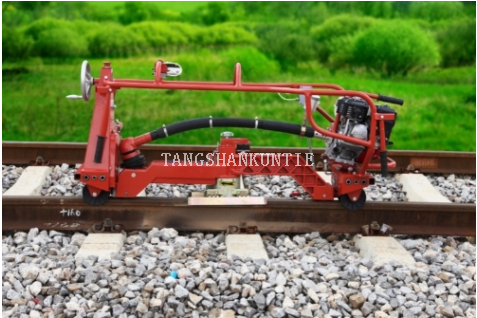
Rail grinding machines come in various forms, each designed to meet specific maintenance needs on railway tracks. Understanding these types helps in selecting the right equipment for efficient rail upkeep.
Hand-held rail grinders are portable tools used for small-scale or precise rail maintenance tasks. Powered typically by gasoline or electric motors, these grinders allow workers to address localized defects, such as minor cracks or surface corrosion. They are ideal for spot repairs, rail preparation before bonding, and maintenance in hard-to-reach areas like switches or crossings. Their portability offers flexibility but limits grinding capacity compared to larger machines.
Rail grinding trains are large, self-propelled vehicles equipped with numerous grinding stones. These trains can handle extensive track sections efficiently, restoring rail profiles and removing defects over long distances. They often feature advanced control systems, laser measurement tools, and multiple grinding modules to ensure precise rail shaping. Rail grinding trains are commonly used for preventive and corrective grinding on mainline tracks, offering high productivity and consistent results.
This specialized robot focuses on turnout areas, where tracks diverge or cross. Turnouts experience unique wear patterns due to complex wheel movements. The double-ended turnout grinding robot can grind both ends of a turnout simultaneously, improving efficiency and ensuring smooth rail profiles. Its precise operation reduces maintenance time and enhances the longevity of these critical track components.
Medium-sized intelligent vehicles balance mobility and grinding capacity. Equipped with smart control systems, they can adapt grinding patterns based on rail condition data. These vehicles are suitable for medium-length track sections and transit systems where flexibility and automation improve maintenance efficiency. Their intelligent features help optimize grinding schedules and reduce manual intervention.
The four-head railway grinding robot is an advanced machine featuring four grinding heads that can operate independently or simultaneously. This design allows comprehensive rail surface treatment, including complex profiles and hard-to-reach areas. The robot's precision and multi-head capability make it effective for both preventive and corrective grinding. It enhances grinding quality while minimizing operational time and disruption.
Tip: For optimal rail maintenance, match the rail grinding machine type to the specific track conditions and maintenance goals to maximize efficiency and rail life extension.
Pre-grinding happens early in the rail’s life, often right after installation. It removes surface defects from manufacturing, welding, or transport. This process eliminates the decarbonized layer and surface irregularities that may have formed during rail production or construction. Pre-grinding ensures the rail head has a smooth, optimal profile from the start. This smoothness improves the contact between train wheels and rails, reducing early wear and damage. It also helps welded joints become smoother, preventing rough spots that could cause vibrations or noise.
Preventive grinding is done regularly before serious defects appear. It targets small cracks and surface fatigue at their earliest stages. By removing these tiny imperfections, preventive grinding stops damage from growing worse. It controls rolling contact fatigue and prevents rail corrugation — the wave-like wear that causes noise and vibration. This type of grinding keeps rails in good condition and extends their lifespan. Railroads schedule preventive grinding based on usage, such as tonnage or time intervals. Regular preventive grinding reduces costly repairs and improves ride quality.
Corrective grinding fixes visible defects that have already developed on the rail surface. It removes severe damage like deep cracks, spalling, plastic flow, and corrugation. This process restores the rail profile to its proper shape after wear or damage has occurred. Corrective grinding is more intensive than preventive grinding and often requires more material removal. It is necessary when defects threaten track safety or cause discomfort. While effective, corrective grinding is less ideal than preventive grinding because it addresses problems after they worsen.
Rail grinding plays a crucial role in extending the life of railway tracks. Over time, rails develop surface defects such as cracks, spalling, and corrugation due to constant friction and heavy loads from passing trains. Grinding removes these damaged layers and restores the rail’s original profile, which reduces stress concentrations and prevents further deterioration. Regular preventive grinding can add 5 to 8 years to a rail’s service life, delaying costly replacements and major repairs. By maintaining an optimal rail profile, grinding also controls rolling contact fatigue, a major cause of rail failure.
A smooth rail surface ensures stable and comfortable train rides. When rails wear unevenly or develop corrugation, passengers feel vibrations and jolts, which reduce ride quality. Rail grinding smooths out irregularities and restores the correct rail shape, improving wheel-rail contact. This leads to less lateral and vertical movement of the train, reducing instability and enhancing passenger comfort. Furthermore, it helps maintain consistent track geometry, which is essential for high-speed rail operations and safe train handling.
Rail corrugation and surface defects cause noise and vibration, often referred to as “roaring rails.” This noise can disturb nearby communities and degrade the experience for passengers. Rail grinding eliminates corrugation and other irregularities that generate these sounds. By restoring a smooth rail surface, grinding reduces vibration transmitted to the track structure and surrounding environment. This not only improves noise levels but also lessens wear on other track components and rolling stock, lowering maintenance costs and extending equipment life.
Rails face constant stress from train wheels, leading to several common defects. These include:
Vertical Wear: Rails lose height from repeated wheel contact.
Side Wear: Rails wear on the gauge side due to lateral forces.
Rail Corrugation: Wave-like patterns form on the rail surface, causing noise and vibration.
Contact Fatigue: Includes spalling, shelling, and cracking caused by repeated stress.
Plastic Flow: Rail metal deforms permanently under heavy loads.
Each defect raises the load impact on rails and track components, increasing the risk of failure. If untreated, these can lead to unstable track geometry and unsafe conditions. They also cause shocks transmitted to sleepers and the trackbed, potentially leading to track subsidence.
Rail corrugation, often called "roaring rails," is a key challenge. It appears as regularly spaced crests and troughs on the rail surface, typically between 20 mm and 200 mm apart. Corrugation worsens over time, increasing noise and vibration levels.
Causes include:
Resonance vibrations of rails between sleepers.
Constant friction from wheel-rail contact.
Uniform train speeds and directions increasing wear patterns.
Solutions to control corrugation involve:
Preventive Rail Grinding: Regularly grinding rails before corrugation forms slows damage growth.
Material Selection: Using heat-treated alloy steel rails with higher hardness resists corrugation better.
Operational Variations: Changing train speeds and directions reduces uniform wear.
Specialized Grinding Machines: Machines like high-speed grinders efficiently remove corrugation with minimal traffic disruption.
Regular rail grinding remains the most effective way to combat corrugation, especially on busy transit systems where operational changes are limited.
Rail grinding operations pose health and safety risks to workers, mainly due to exposure to vibration and shock. Operators of maintenance vehicles experience whole-body vibrations, especially in the lumbar spine area, which can cause long-term injuries.
Key points include:
Exposure limits for whole-body vibration are recommended by organizations like ACGIH and ISO.
Operator posture significantly affects injury risk.
Vibration risk models suggest higher injury likelihood than older standards indicate.
Protective measures include ergonomic vehicle design, vibration dampening seats, and limiting exposure duration.
Besides vibration, other safety concerns involve noise exposure, dust from grinding, and machine operation hazards. Proper personal protective equipment (PPE) and training are essential to minimize risks.
High-speed grinding is a modern rail maintenance technology that allows grinding at speeds around 80 km/h. Unlike traditional grinding trains that operate slowly, high-speed grinders minimize disruption to rail traffic. They maintain rail profiles and remove surface defects efficiently while trains continue to run on the same tracks.
This technology uses grinding wheels rotating at high speeds, combined with the vehicle’s forward motion to achieve fast material removal. It focuses on preventing defects like rail corrugation by regularly smoothing the rail surface before damage worsens. High-speed grinding is especially useful on busy freight and transit lines where downtime must be minimized.
The Grinding Quality Index (GQI) is a software-based system that measures rail profiles before and after grinding. It uses laser sensors mounted on the grinding machine to scan the rail surface and compare it to the ideal rail profile.
GQI scores range from 0 (low priority) to 100 (high priority), helping operators identify sections needing urgent grinding. The system records data for each rail segment, producing detailed reports on grinding effectiveness. These reports assist maintenance planners in prioritizing work and monitoring long-term rail condition trends.
By providing real-time feedback, GQI improves grinding precision and efficiency. It ensures consistent rail shape restoration, reduces unnecessary material removal, and optimizes grinding schedules. This technology supports a data-driven approach to rail maintenance.
Rail milling is an advanced method that removes rail surface defects by cutting rather than grinding. Milling machines use rotating cutters to precisely reshape the rail head, restoring its profile with high accuracy.
Compared to grinding, milling offers several advantages:
Produces smoother rail surfaces with less micro-cracking.
Removes damaged metal more uniformly.
Can handle severe defects and worn rails effectively.
Generates less heat and reduces residual stress in the rail.
Rail milling is often combined with grinding in maintenance programs to maximize rail life. Milling machines are typically mounted on specialized vehicles that can operate on mainline tracks. This technology is gaining popularity, especially in Europe, for its precision and long-lasting results.
The future of rail grinding lies in advanced technologies like high-speed grinding and rail milling. These innovations ensure efficient rail maintenance, reduce downtime, and enhance safety. Tangshan Kuntie Technology Co., Ltd. offers cutting-edge rail grinding machines that deliver precise rail profiling and defect removal. Their products extend rail life, improve ride quality, and reduce noise. By integrating modern technology, Tangshan Kuntie Technology Co., Ltd. provides significant value to railway systems, ensuring smooth, safe, and cost-effective rail operations.
A: A Rail Grinding machine is a maintenance tool used to restore the shape and surface of railway tracks, removing defects like wear and cracks to improve rail performance and longevity.
A: A Double-ended Turnout Grinding Robot efficiently grinds both ends of a turnout simultaneously, enhancing the rail profile and reducing maintenance time in critical track areas.
A: Medium-sized Intelligent Rail Grinding Vehicles offer mobility and smart control systems, adapting grinding patterns to rail conditions for efficient maintenance of medium-length track sections.
A: The Four-Head Railway Grinding Robot provides comprehensive rail surface treatment with its multi-head capability, enhancing grinding quality and minimizing operational time.
A: Railway rail grinding smooths out surface irregularities, enhancing wheel-rail contact, reducing vibrations, and providing a more stable and comfortable train ride.


