
close
Choose Your Site
Global
Social Media


Views: 0 Author: Site Editor Publish Time: 2026-04-09 Origin: Site


In railway maintenance and track construction, minimizing track possession time is the ultimate metric of success; every minute of operational downtime exponentially increases project costs. Utilizing subpar or mismatched cutting equipment results in inaccurate cuts, excessive blade wear, operator fatigue, and misaligned rail joints. These downstream errors ultimately lead to premature track fatigue and costly thermite weld failures.
Achieving a perfect, 90-degree cut safely and quickly requires moving beyond basic tool selection. Track supervisors must evaluate the mechanics behind heavy-duty Rail Sawing to ensure structural integrity at every joint. This guide breaks down the top five technical evaluation tips for selecting and operating rail sawing equipment. It balances upfront specifications with long-term Total Cost of Ownership (TCO) and advanced operational protocols to keep your maintenance teams moving efficiently.
Power Source Alignment: Selecting between a lithium battery rail sawing machine and an internal combustion rail cutter dictates mobility, enclosed-space compliance, and sustained torque capabilities.
Precision Mechanics: Rigid mounting clamps, laser guidance, and articulating arms are non-negotiable for achieving exact 90-degree cuts and preventing blade binding.
Consumable Efficiency: Strict matching of blade type (TCT vs. Abrasive) and tooth count to material density and machine RPM dramatically lowers the per-cut cost.
Lifecycle Cost Mitigation: True equipment ROI is driven by strict daily maintenance logs—proven to extend equipment life by up to 30%—and vibration-dampening ergonomics that protect both machine and operator.
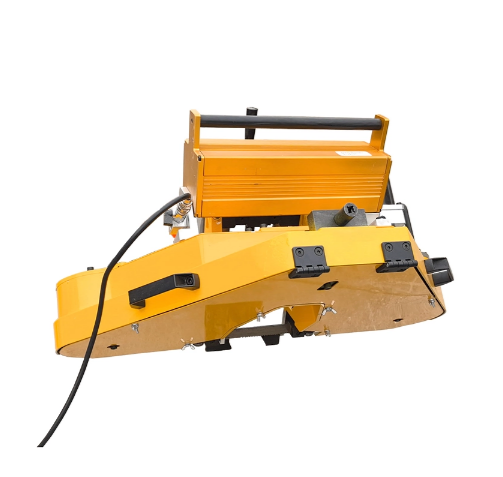
Field crews operating in remote environments frequently rely on the raw mechanical output of an Internal combustion rail cutter. These units deliver the high, sustained torque necessary for continuous, heavy-duty cutting of dense rail profiles, such as 136 RE and 141 AB, especially in isolated locations completely lacking electrical grid access. The primary advantage of a two-stroke or four-stroke combustion engine is its immediate refueling capability. When facing a narrow track possession window, crews can simply refill the gas tank and immediately resume cutting without waiting for extended charging cycles.
Combustion power introduces specific operational trade-offs that project managers must calculate accurately. These engines generate severe noise pollution and localized exhaust fumes, immediately disqualifying them from use in underground subway environments or poorly ventilated mining networks. Furthermore, operators must strictly adhere to hazardous fuel storage protocols on site. Ongoing maintenance demands are heavy; crews must regularly service carburetors, replace spark plugs, and inspect air filters. In highly abrasive railway environments, airborne steel dust easily chokes an improperly maintained engine. You must also account for high-altitude performance loss. Standard combustion engines lose approximately 3% of their power for every 1,000 feet of elevation gain due to thinner air, requiring field-level carburetor adjustments to maintain cutting RPM.
Modern environmental regulations and worker safety standards heavily favor the Lithium battery rail sawing machine. Zero direct emissions make these units mandatory for transit authorities operating in enclosed subway tunnels, underground mining networks, or noise-restricted urban transit zones. Without toxic exhaust gases, crews require far less ventilation infrastructure, significantly reducing secondary operational costs and improving overall site safety.
Battery-powered units deliver unmatched reliability through smart automation. Push-button starting completely eliminates the physical strain of yanking pull-cords, a frequent source of shoulder injuries during sub-zero winter shifts. Modern battery units integrate advanced Battery Management Systems (BMS) and digital diagnostic software that optimizes power output based on cutting resistance. This intelligent power delivery prevents motor stalling and improves overall cutting efficiency.
Despite these advantages, battery scalability poses distinct logistical requirements. To successfully transition your fleet to battery power, follow these essential procurement steps:
Calculate your maximum required cuts per shift to determine total amp-hour (Ah) requirements.
Procure a minimum of two high-capacity backup batteries per active sawing machine to prevent midday depletion.
Install mobile, high-speed charging infrastructure inside transport vehicles using heavy-duty power inverters.
Implement temperature-controlled storage protocols, as lithium cells lose discharge capacity rapidly in freezing weather.
Standardize your entire tool fleet on a single battery voltage platform (e.g., 72V or 80V) to ensure universal compatibility across multiple tools.
| Specification | Internal Combustion Cutter | Lithium Battery Machine |
|---|---|---|
| Primary Use Case | Remote, high-volume track laying | Transit networks, tunnels, urban repairs |
| Emissions & Noise | High (Requires heavy ventilation) | Zero emissions, significantly quieter |
| Refueling / Recharge | Instant gas refill | Requires charging cycles and backup packs |
| Cold Weather Start | Requires pulling cords, prone to flooding | Push-button start, instant torque |
| Maintenance Needs | Spark plugs, air filters, oil, carburetors | Motor cleaning, battery terminal protection |
Precision is the single most important factor when preparing a rail for a thermite weld or an insulated joint installation. The cost of angular deviation is severe. Even a microscopic 1-degree lateral deflection during a cut leaves a jagged, unaligned face. This error necessitates heavy manual grinding to square the rail ends, wasting valuable track possession time and delaying subsequent installation stages. Thermite welding requires a highly precise gap tolerance; off-axis cuts create uneven weld pools that fail under heavy dynamic loads.
To eliminate deflection, you must evaluate equipment based strictly on its rail-web clamping system. Do not rely on gravity or sheer operator strength. Multi-point articulating arms that lock directly onto both the rail base and the rail web provide the exact rigidity required to counter immense rotational forces. When the saw blade engages the hardened steel, the clamping mechanism absorbs the vibration, ensuring the cutting axis remains completely static.
Attachment speed and structural stability dictate field efficiency. Compare quick-release, over-center locking mechanisms against traditional threaded clamp designs. An over-center lock applies massive, instant pressure to the rail web, whereas threaded clamps take longer to set and are prone to thread galling in dusty environments. The chosen system must actively resist loosening from the high-frequency vibrations generated during the cut.
Premium rail saws increasingly feature integrated laser guide lines. These visual aids allow operators to achieve zero-deviation alignment before the blade even touches the steel. Furthermore, adjustable depth stops prevent the blade from over-penetrating the cut. Over-penetration damages the underlying track bed, ruins the ballast, or causes the blade to strike the mounting arm itself.
To ensure flawless clamping execution on every cut, operators must follow a strict mounting protocol:
Wire-brush the rail web and base to remove heavy rust, grease, and loose debris that could cause clamp slippage.
Position the primary mounting arm directly over the intended cut mark, aligning it perfectly with the neutral axis of the rail.
Engage the over-center locking mechanism, ensuring a solid, flush connection against both sides of the web.
Activate the laser targeting system and verify the beam falls exactly on your pre-marked layout line.
Adjust the depth stop screw to halt the blade's downward travel one inch past the bottom of the rail base.
Utilizing the wrong blade for a specific rail material destroys your operational budget. Operating a blade at an incompatible Revolutions Per Minute (RPM) instantly alters the metallurgy of both the rail and the tool. Running too fast glazes the abrasive edge or rapidly chips delicate carbide teeth. This instantly ruins a high-cost consumable, ruins the rail face by creating a hardened heat-affected zone, and risks catastrophic operator injury from flying shrapnel.
Understanding the strict mapping between rail hardness, blade composition, and motor speed is essential for flawless execution. Below is a structural breakdown of industry-recommended blade matching protocols.
| Rail Material Type | Recommended Blade Type | Optimal Tooth Count / Profile | Required RPM Target |
|---|---|---|---|
| Standard High-Speed Steel (HSS) | Tungsten Carbide Tipped (TCT) / Cold Saw | 60-Tooth TCT Blade | ~3000 RPM |
| Ultra-Hard / Heat-Treated Rail | Diamond-Coated / Specialty Alloy | 40-Tooth Diamond Profile | ~2800 RPM (Reduced for cooling) |
| Standard Carbon Steel Track | Abrasive Cutting Disc | Continuous Abrasive Edge | 4000+ RPM (Depends on disc) |
Abrasive discs remain highly cost-effective for standard carbon steel tracks. However, they naturally reduce in overall diameter as they wear down against the steel. Operators must dynamically adjust their plunge depth throughout the cut to compensate for this shrinking circumference. Optimal operational speeds for abrasives are generally much higher, often exceeding 4000 RPM to maintain adequate friction.
Conversely, Tungsten Carbide Tipped (TCT) or Cold Saws are engineered for lower, strictly controlled RPMs. They deliver safe, spark-free cuts without creating a detrimental heat-affected zone that weakens the rail end. Ultra-hard rail demands a slower 2800 RPM approach to prevent tooth loss and thermal damage.
To eliminate jagged edges and dangerous blade slip, teams must follow a rigorous Standard Operating Procedure (SOP) for precision cutting. Operators must allow the saw motor to reach absolute full speed before making any physical contact with the rail. Pushing a stationary blade against the steel and then pulling the trigger strips the drive belt and snaps the gear mechanism. Furthermore, operators must wait for the blade to come to a complete and total stop before retracting the unit from the kerf.
When utilizing specialized alloy blades for continuous cuts, a pressurized or gravity-fed water coolant system is required. Copious coolant flow prevents thermal warping of the thin blade core during high-friction operations, preserving blade geometry and extending consumable life across multiple shifts.
Cutting solid steel exposes operators to extreme mechanical forces. High-end cutting models feature advanced centrifugal clutch systems designed to protect field workers. If the heavy steel rail shifts slightly and pinches the blade inside the kerf, the clutch instantly disengages the drive belt. This automated mechanical disconnect prevents violent machine kickback, keeping the operator from being thrown backward or struck by the handles.
Every field unit must be equipped with an easily accessible, highly visible emergency stop switch. Operators wearing thick protective gloves must be able to hit this switch instantly without fumbling. Furthermore, spark, metal shard, and water containment deflectors must be robust and fully adjustable. These heavy-duty shields protect the operator’s face and body, while also preventing hot metal slag from damaging nearby transit infrastructure, melting communication cables, or igniting dry brush beside the right-of-way.
Slicing through railway steel generates microscopic, highly hazardous dust and metallic particulate. Equipment selection should always be paired with mandated respiratory Personal Protective Equipment (PPE). Relying solely on the machine's water suppression system is insufficient for enclosed tunnel work. Crews must utilize P100 particulate filters and ANSI Z87.1 rated face shields to block both heavy metal dust and high-velocity shrapnel.
Ergonomic considerations directly impact productivity and safety for field crews. Prolonged, continuous use of heavy, vibrating cutting equipment leads to a debilitating nerve and vascular condition known as Hand-Arm Vibration Syndrome (HAVS). Project supervisors must evaluate the machine's suspended handle designs, rubberized isolation mounts, and official vibration emission metrics measured in meters per second squared (m/s⊃2;). Tools with superior dampening technology allow operators to work longer shifts safely without losing grip strength or precision. Aim for equipment that keeps vibration levels below the recognized 2.5 m/s⊃2; action value to minimize long-term health risks to your maintenance workforce.
Procurement teams frequently err by selecting rail tools based solely on the initial retail price. True financial impact is measured through Total Cost of Ownership (TCO). TCO drivers are heavily dominated by the replacement rates of expensive consumables, including diamond blades and reinforced drive belts. Fuel and electricity costs, unplanned downtime during track possession windows, and hidden equipment leasing fees will rapidly eclipse the baseline purchase price of the saw.
Industry data confirms a massive financial advantage for highly organized maintenance. Tools with strictly documented daily maintenance logs reliably outlast unmaintained counterparts by up to 30%. This 30% lifespan boost translates directly to tens of thousands of dollars saved annually across a large fleet. If you rent equipment, demand full maintenance records from your leasing partners before deploying units to your active job site.
To enforce these standards, adopt the following standardized maintenance schedule for your rail sawing equipment:
| Maintenance Interval | Required Action Item | Target Component |
|---|---|---|
| Daily (Pre-Shift) | Check structural integrity, fluid levels, and battery contacts. | Clamps, fuel tanks, lithium terminals |
| Daily (Post-Shift) | Blow out air filters to remove abrasive metallic dust. | Engine intake, cooling fins |
| Weekly | Calibrate and measure exact drive belt tension. | Drive belts, centrifugal clutch |
| Monthly | Grease articulating clamp joints and inspect spark arrestors. | Mounting arm, exhaust system |
For combustion units, daily blow-outs of air filters are mandatory. The microscopic metal dust generated from rail cutting is exceptionally abrasive. If this dust bypasses a clogged air filter and enters the engine, it scores the cylinder walls, destroying motor compression within a single shift. Use only ethanol-free fuel for two-stroke engines to prevent carburetor gumming during storage.
Battery unit lifecycle management requires entirely different protocols. Apply dielectric grease to battery terminal contacts to prevent electrical arcing during wet weather operations. Keep lithium packs stored in temperature-controlled environments to maintain optimal cell balancing.
Finally, drive belt tensioning remains a universally mandated maintenance task across all power platforms. A slipping or loose drive belt causes the blade’s RPM to drop immediately under heavy load. This drop in speed drastically accelerates blade wear and causes the motor to overheat. Belt tension must be checked physically and calibrated weekly using appropriate tension gauges to ensure maximum power transfer from the motor to the cutting spindle.
Take the following actions immediately to optimize your track operations and lower your equipment costs:
Audit your current blade consumption rates over the last 90 days and cross-reference them with the specific motor RPM settings used by your field crews.
Request active field demonstrations of your shortlisted equipment, measuring the exact clamping rigidity and laser guidance accuracy under live cutting loads.
Calculate the specific vibration metrics (m/s⊃2;) of your current inventory against modern, suspended-handle designs to project potential reductions in operator fatigue.
Build a comprehensive 3-year Total Cost of Ownership (TCO) model that heavily weights fuel and charging infrastructure costs alongside expected blade longevity and planned downtime.
A: Lifespan varies heavily by material and operator technique. A high-quality TCT blade cutting standard carbon rail yields 50 to 100 cuts if operators strictly follow RPM and coolant protocols. Abrasive discs degrade much faster, typically requiring replacement after 10 to 15 cuts. Mismatched speeds or aggressive plunging destroys any blade instantly.
A: Modern high-capacity lithium units typically achieve 30 to 50 cuts on standard 136 RE rail per charge. Factors affecting this output include ambient temperature, rail hardness, blade sharpness, and applied operator pressure. Cold weather and dull blades significantly reduce overall battery efficiency and total cuts per charge.
A: Engaging the steel before reaching maximum motor speed causes extreme mechanical shock. It strips the internal drive belts, damages the centrifugal clutch, and chips the carbide teeth on the blade. Full RPM ensures the blade cuts efficiently through the steel surface rather than grabbing and binding on impact.
A: No. Abrasive discs are specifically designed for high-speed friction cutting, typically operating well above 4000 RPM. Cold cutting saws operate at much lower speeds, usually around 2800 to 3000 RPM. Using an abrasive disc on a low-RPM machine drastically reduces cutting efficiency, increases heat generation, and rapidly degrades the disc.
A: Most heavy-duty field rail saws safely accommodate standard profiles up to 141 AB and 136 RE. Larger crane rail profiles may require specialized clamping extensions or larger blade diameters. Always verify the maximum cutting depth and clamp width specifications of your chosen saw before attempting to cut oversized profiles.
A: Binding occurs due to the massive weight of the rail shifting as its structural integrity is compromised at the end of the cut. If the rail lacks perfect support on both sides of the kerf, the two ends sag inward, violently pinching the blade. Proper cribbing and under-rail support prevent this hazard.
A: You should visually inspect drive belts daily for fraying, glazing, or missing teeth. Tension must be checked weekly using a calibrated gauge. Depending on usage frequency and load pressure, belts generally require full replacement every 3 to 6 months to prevent RPM loss and ensure maximum power transfer.


