
close
Choose Your Site
Global
Social Media


Views: 0 Author: Site Editor Publish Time: 2026-04-23 Origin: Site


In rail infrastructure construction and maintenance, track integrity relies entirely on precision. A single misaligned, overheated, or poorly bored bolt hole can lead to microscopic fractures, jeopardizing the entire rail segment under extreme high-tonnage stress. When multiple tons of freight pass over a compromised joint, these invisible stress points rapidly expand into catastrophic structural failures. Procurement managers and site maintenance engineers face a deeply fragmented market of track equipment. Balancing field mobility, torque requirements, web clearance constraints, and strict environmental regulations makes selecting the right unit a high-stakes operational decision. You cannot afford downtime or equipment failures during highly restricted track possession windows. This guide breaks down the technical evaluation of modern rail drilling systems—from power delivery methods and tooling physics to total cost of ownership—helping buyers shortlist equipment that aligns exactly with their specific operational realities.
Power Source Trade-Offs: The shift toward the Lithium Battery Rail Drilling Machine offers zero-emission compliance and extreme mobility, but requires strict Ah (Ampere-hour) calculations against daily hole-count requirements compared to continuous-torque corded models.
Clearance and Ergonomics Matter: Selecting compact, low-height magnetic frames with integrated anti-vibration systems can reduce operator musculoskeletal disorders (MSDs) by up to 50% while accommodating restricted track web clearances.
Tooling Dictates the Machine: Equipment must be paired with the correct consumables; annular cutters (TCT) are non-negotiable for clean >12mm joint holes, while specialized twist drills suffice for <12mm grounding and signal bonding.
Precision Safeguards: The presence of adjustable depth stops, centering guides, and pressurized coolant systems separates professional-grade equipment from high-risk, entry-level tools.
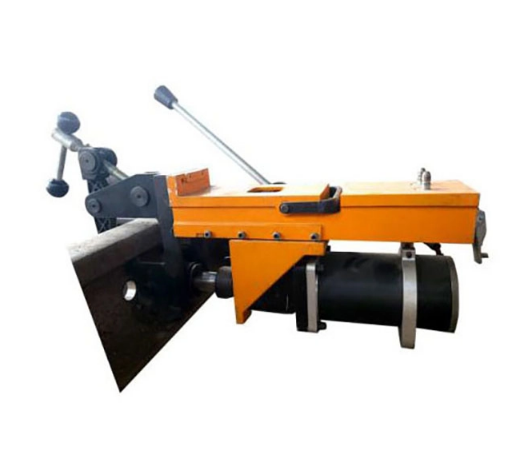
You must understand the physical anatomy of track maintenance equipment before evaluating technical specifications. Standard industrial drills fail immediately on railway tracks due to vibration and clamping issues. Rail web geometry requires highly specialized clamping mechanisms. The over-rail clamping base is the fundamental structural component. It locks directly onto the rail profile to provide immense, vibration-dampening stability. Without this rigid foundation, the drilling bit wanders off-center, causing out-of-tolerance holes that fail engineering inspections.
Above the clamping mechanism sits the rigid support column. This vertical column supports the feed mechanism and the motor spindle. These moving parts must interact seamlessly with specific rail web geometries, such as standard UIC 60, 115 RE, 136 RE, or ASCE profiles. The structural integrity of the machine ensures perfect perpendicularity across the X and Y axes. If the spindle deviates even a fraction of a degree, the resulting hole places uneven shear stress on the splice bar bolts. Over time, passing train wheels will exploit this weak point, causing severe joint deterioration and requiring emergency track replacement.
Frame your purchasing decision entirely around your daily application requirements. Railway drilling tasks generally fall into two distinct operational categories. The first is heavy-duty structural bolting. Installing fishplates and splice bars demands exacting diameter control and smooth internal finishes. These structural holes usually exceed 20mm in diameter. They require massive downward pressure and consistent motor torque to bore through work-hardened, high-carbon steel without stalling the machine.
The second category involves low-diameter micro-drilling. Technicians frequently drill tiny holes for electrical track bonds, signaling sensors, and grounding wires. These utility holes often measure less than 12mm. Heavy-duty structural drills are typically too aggressive for these delicate applications. High torque and heavy feed mechanisms can snap small twist drills instantly upon contact with the web. You must identify whether your teams perform continuous heavy structural boring, lighter signaling work, or a mix of both. Equipment designed for versatile deployment features rapid spindle RPM adjustment capabilities to handle both tooling extremes.
Field operations rarely offer clear, unobstructed working conditions. Your crews operate in highly restricted trackside environments. Ballast depth, adjacent active transit tracks, third-rail power lines, or trackside switchgear severely limit the physical footprint available for machinery. Traditional tall pillar drills cannot fit under these tight constraints. They pose extreme safety hazards when deploying near active adjacent lines.
This operational reality necessitates compact, low-height structural designs. A low-profile unit allows single-operator deployment in confined track spaces without foul-line encroachment. Fast deployment and retrieval dictates success during short track possession times. The machine must follow a strict sequential deployment flow to maximize safety and efficiency.
Operator positions the template shoe against the specific rail web profile.
The over-rail clamp is manually or hydraulically locked to secure the base.
The coolant feed is engaged and pressurized.
The spindle is lowered to execute the cut automatically or manually.
The clamp is released, and the machine is extracted within seconds.
Heavy, cumbersome equipment disrupts this deployment sequence, increases operator physical fatigue, and drastically slows down daily maintenance schedules.
Remote track locations rarely offer convenient power grids or accessible outlets. Dragging heavy portable generators across uneven track ballast is physically dangerous and logistically slow. This friction explains the rapid industry shift toward cordless technology. A modern Lithium Battery Rail Drilling Machine provides immediate, untethered deployment capabilities. Operators simply carry the self-contained unit to the defect location, clamp it, and initiate the cut without managing cables.
Battery platforms also solve mandatory compliance issues for contractors. Urban transit networks and underground subway tunnels enforce strict zero-emission regulations. Internal combustion generators emit toxic carbon monoxide, making them completely illegal in confined spaces. Battery-powered units operate with zero emissions. They keep maintenance teams compliant with local environmental laws and occupational safety mandates regarding air quality.
You must manage daily performance expectations through strict power mathematics. Modern battery platforms run on 18V, 36V, or even 72V architectures for heavy rail applications. High-capacity Ampere-hour (Ah) ratings dictate your absolute runtime. You must calculate average holes per charge based on your specific rail steel hardness and hole diameter. For example, a heavy-duty 12Ah battery might yield 30 to 40 holes measuring 22mm on standard rail before hitting voltage cutoff limits. Procurement teams must purchase sufficient backup batteries and multi-bay rapid chargers to sustain continuous 8-hour shifts without workflow interruptions.
Corded electric machines remain relevant for specific high-volume rail construction applications. When track operators drill hundreds of holes consecutively during massive new track laydowns, electric drills provide continuous, unwavering high wattage. They prevent the minor RPM drop-off that occasionally happens when a lithium battery reaches a critically low state of charge. Consistent torque ensures uniform hole quality and prevents cutter tooth damage across large-scale projects.
Electric drills carry heavy hidden infrastructure costs. You must transport, fuel, maintain, and secure portable generators daily. Long extension cords introduce massive tripping hazards along the uneven trackbed. Voltage drops over long cable runs (exceeding 50 meters) can prematurely burn out electric drill motors by starving the stator of required amperage. You must weigh the operational benefit of infinite runtime against the severe logistical penalty of generator reliance.
Acoustic and mechanical vibration output differs significantly between the two systems. Battery-powered units utilizing high-end brushless motors generally yield lower decibel ratings. They operate much smoother than their heavy generator-powered counterparts. This reduction in noise pollution and mechanical vibration drastically improves operator comfort during long night shifts, reducing the long-term risk of permanent hearing damage and hand-arm vibration syndrome (HAVS).
The motor is the primary driver of your equipment's reliability. The railway tooling industry is rapidly abandoning traditional brushed motors in favor of smart, electronically commutated options. Brushless motors represent a massive leap in mechanical efficiency. By eliminating physical carbon brushes, they generate far less internal friction and ambient heat. This structural upgrade reduces machine maintenance requirements by roughly 30%. Brushless technology utilizes stored battery energy far more effectively, increasing overall runtime efficiency by up to 50% per charge compared to legacy models.
You must prioritize units featuring Electronic Speed Control (ESC). Variable RPM functionality is a fundamental necessity based on metallurgical physics. Harder rail metals and larger hole diameters require mathematically slower rotational speeds. If the spindle spins the cutter too fast, it generates extreme friction. This friction instantly work-hardens the high-carbon rail steel, creating an impenetrable glazed surface. It also immediately destroys the expensive tungsten teeth on the cutter. ESC allows operators to dial in the exact RPM required for the material hardness and bit diameter.
| Specification Metric | Lithium Battery Models | Corded Electric Models |
|---|---|---|
| Track Mobility | High. Single operator deployment without trip hazards. | Low. Requires dragging generators and heavy extension cords. |
| Air Quality Emissions | Zero-emission. Mandatory for tunnels and urban transit. | Toxic exhaust emissions from necessary fuel generators. |
| Continuous Runtime | Limited by Ah rating. Requires rotating battery stockpiles. | Infinite, provided generator fuel levels are maintained. |
| Torque Consistency | Maintained by smart electronics until hard battery cutoff. | Constant, but highly vulnerable to voltage drops on cords. |
Operator error causes the vast majority of bolt-hole misalignments and subsequent joint failures. Professional equipment mitigates this human risk through foolproof hardware design. You must verify that your rail drilling machine specification includes centering guides and specialized rail-profile templates. These templates, known in the industry as profile shoes, map exactly to the specific curvature of the rail web. They force the drill spindle into perfect perpendicular alignment every single time the clamp engages, regardless of operator skill level.
Adjustable depth stops act as a secondary precision safeguard. They prevent the cutter from over-traveling and smashing into the opposite side of the clamp once it breaches the rail web. For repetitive high-volume projects, evaluate units featuring CNC-inspired auto-feed functionality. Auto-feed systems utilize internal sensors to detect the physical resistance of the steel and adjust the downward spindle pressure automatically. This technology completely removes operator variance, maximizes expensive cutter lifespan, and guarantees mathematically uniform hole quality across thousands of cuts.
Track maintenance environments systematically destroy fragile consumer-grade equipment. Silica ballast dust, highly conductive metallic mud, driving rain, and intense vibratory shock are daily realities. Your selected equipment must include extreme durability markers to survive a single season on the rails. Demand exterior housings constructed from impact-resistant hardened steel and reinforced poly-nylon blends.
Internal gearboxes must be fully sealed against particulate intrusion. If metallic swarf or silicate track dust breaches the gearbox casing, the internal planetary cogs will grind themselves to useless fragments within weeks. Inspect the stated IP (Ingress Protection) ratings of the electrical components. High-quality track machines isolate their sensitive circuit boards in thick protective potting resin. This prevents catastrophic moisture damage and electrical shorts during mandatory wet weather operations.
Track workers suffer disproportionately high rates of musculoskeletal disorders (MSDs). Lifting heavy, unbalanced equipment repetitively exacerbates joint, shoulder, and spinal wear. Modern drill manufacturers prioritize calculated weight distribution. Centered, reinforced carrying handles allow operators to transport the heavy unit close to their center of gravity without twisting their lower backs. Integrated anti-vibration systems isolate the motor's violent shaking from the operator control handles. These targeted ergonomic upgrades reduce daily operator fatigue and lower MSD risk profiles by up to 50%.
Strict safety protocols tie directly into the mechanical design. Exposed spinning components present extreme entanglement hazards on windy tracks. Professional machines feature heavy-duty transparent swarf guards to prevent loose high-visibility safety clothing from wrapping around the spindle. They incorporate redundant electronic fail-safes. If the magnetic or mechanical base loses its grip by even a millimeter, or if the feed mechanism experiences sudden violent resistance, the internal gyro sensors instantly cut motor power to protect the operator from rotational wrist injuries.
The most advanced machine on the market serves zero purpose without the correct cutting tool attached to the arbor. For track joints, splice bars, and fishplate holes exceeding 12mm, Tungsten Carbide Tipped (TCT) annular cutters are absolutely mandatory. Standard twist drills attempt to push through the entire solid diameter of the hole, requiring massive motor torque and generating immense, destructive heat. Annular cutters utilize completely different mechanical physics.
Because they feature a hollow core, annular cutters only machine the outer periphery of the hole. They leave a solid cylindrical slug of steel in the center, which a spring-loaded pilot pin ejects upon completion. This hollow-core physics requires significantly less motor torque to achieve the same diameter. It generates far less heat, protecting the rail's highly sensitive metallurgical structure from thermal damage. Most importantly, it leaves a clean, burr-free internal finish. A smooth internal bore acts as a critical safeguard against stress-crack propagation under heavy dynamic train loads.
Not all rail tasks require large-diameter annular cutters. Electrical bonding, grounding cables, and signaling track circuits require very small diameter utility holes, sometimes down to 2mm. You cannot manufacture or utilize hollow annular cutters for these micro-bores due to physical size limitations. Instead, operators must switch to specialized rail twist drills.
Standard hardware store twist drills will snap instantly against work-hardened track steel, leaving broken high-speed steel embedded in the rail web. Rail-specific twist drills feature heavily reinforced core flutes, specialized cobalt blends, and optimized cutting angles (usually 135-degree split points). They withstand the immense downward pressure required to pierce the rail web cleanly. Ensure your selected drilling machine accepts standard drill chuck adapters or Weldon shanks to accommodate these smaller bits seamlessly without requiring specialized factory modifications.
Thermal accumulation is the primary enemy of both rail integrity and tool longevity. Gravity-fed exterior drip systems or manual spray bottles prove wholly insufficient for drilling high-carbon rail steel. The intense friction generated at the cutting edge instantly vaporizes surface-applied lubricants before they penetrate the cut. Pressurized internal coolant delivery is mandatory for professional results. High-quality machines pump specialized, high-viscosity cutting fluid directly through the center of the arbor and out through the hollow center of the annular cutter.
This internal fluid pressure forces cold liquid directly onto the active cutting teeth. It lowers material temperatures instantly and dynamically flushes sharp metal chips out of the cutting groove. Without this high-pressure fluid flush, metal chips accumulate and recut against the teeth, dulling the expensive tungsten bit prematurely and scoring the inside of the bolt hole.
Following the active cut, hole cleanout acts as a critical procedural safety step. Operators must clear all residual metal swarf, cutting paste, and grinding dust from the hole and surrounding web surface. Failure to thoroughly clear the dust compromises the flushness of the fishplate clamping mechanism. Even a single millimeter of compressed metallic dust prevents the splice bar from sitting perfectly flat against the web. This gap reduces structural bolt retention forces dramatically, leading to loose joints, increased track vibration, and severe derailment risks over time.
Procuring heavy railway machinery requires deep supply chain vetting and mechanical auditing. Do not purchase generic industrial magnetic drills hoping to repurpose them for track work. You must partner with manufacturers who engineer equipment exclusively for railway infrastructure. Demand documented evidence of strict industry compliance, ISO manufacturing standards, and localized safety certifications.
A reputable heavy-duty manufacturer offers deep engineering support. They provide customized rail-profile shoes tailored entirely to your specific track network geometry. If you operate on legacy tramways, specialized crane rails, or highly worn track sections, standard clamping shoes will not grip safely. The chosen manufacturer must possess the CNC machining capability to create bespoke clamping accessories to guarantee operational safety on your exact rails.
Focusing solely on the initial retail purchase price guarantees a massive financial miscalculation. Procurement departments must analyze the comprehensive Total Cost of Ownership (TCO) over a five-year lifecycle. A lithium battery setup carries a higher initial Capital Expenditure (CapEx) strictly due to the cost of heavy-duty, high-capacity power cells. However, its long-term Operational Expenditure (OpEx) proves significantly lower. You permanently eliminate daily fuel purchases, engine oil changes, spark plug replacements, and generator repair costs from the budget.
Consumable burn rates heavily dictate your final TCO. You must calculate your average tooling cost per hole. A cheap, vibrating drill motor will shatter a premium $50 annular cutter after just ten holes due to micro-chatter. A highly rigid, auto-feed machine utilizing pressurized through-spindle coolant will extend that exact same cutter's life to well over fifty holes. Investing heavily upfront in machine stability and automated feed controls directly reduces your ongoing consumable expenses month over month.
Apply a strict financial formula to your equipment needs. Dedicated track maintenance teams, tier-one rail contractors, and transit authorities who drill holes daily should absolutely purchase high-end automatic units. The initial CapEx pays for itself rapidly through drastically increased daily efficiency, reduced manual labor hours, and lower consumable burn rates.
Short-term infrastructure expansion contractors or civil engineering firms face a different reality. If you only need specialized track drilling equipment for a localized three-month switchgear replacement project, purchasing the equipment outright creates immediate depreciation liabilities. The machine will sit dormant in a warehouse upon project completion, accumulating ongoing battery maintenance costs. For sporadic, highly specialized rail operations, renting professional, calibrated equipment from certified dealers preserves operational capital liquidity.
Executing a bore hole is never an isolated mechanical event. It represents step one in a highly complex, time-sensitive maintenance workflow. Clean, precise, burr-free Rail Drilling directly minimizes delays for the bolting and fastening teams following immediately behind the drill operator. If a hole is poorly aligned or heavily burred, the bolting crew must stop their process, manually file the burrs, or ream the hole to force the bolt through. This wastes highly precious track possession time and drives up labor costs.
Structural drilling quality directly impacts long-term track geometry. Once a new joint is securely fastened with zero tolerance gaps, the underlying trackbed usually requires heavy stabilization. High-quality joint connections allow downstream automated machines, such as intelligent rail tampers, to correct the track alignment smoothly. Poorly drilled, loose joints disrupt this automated tamping process, creating long-term network instability and requiring premature rework.
The optimal rail drilling machine is not universally the most powerful unit listed in a catalog. The correct choice requires identifying the machine that aligns strictly with your site's remote power availability, trackside clearance limits, and daily high-volume hole requirements. Procuring the wrong configuration guarantees daily workflow bottlenecks, elevated tooling costs, and severely compromised track joint safety.
To finalize your procurement process, execute these specific actions:
Audit your power availability to determine if a zero-emission lithium battery unit is required for remote deployments, or if your site supports the heavy logistical footprint of continuous-wattage corded electric models.
Map your exact daily hole diameters to ensure the arbor seamlessly accommodates both heavy-duty TCT annular cutters for structural joints and specialized twist drill chucks for signaling wire micro-bores.
Demand strict ergonomic hardware features, outright rejecting any unit lacking integrated anti-vibration handles and centered weight distribution, as operator fatigue directly causes tooling damage and safety incidents.
Require a live, on-track field demonstration using your network's exact rail profiles (e.g., UIC 60, 115 RE) to physically verify the over-rail clamping safety and perpendicular boring precision.
Audit the manufacturer's warranty policies meticulously, confirming robust financial coverage for battery cycle life degradation, brushless motor wear, and guaranteed availability of custom-machined profile shoes.
A: The over-rail clamping base and profile shoe compatibility stand as the absolute most critical specifications. If the machine cannot clamp rigidly and perfectly perpendicular to your specific rail web geometry, the drill bit will vibrate uncontrollably. This vibration causes inaccurate hole alignments, instantly shattered carbide cutter bits, and severe rotational safety hazards for the operator.
A: Voltage determines the machine's sheer torque and maximum power output, providing the necessary force to push through work-hardened, high-carbon steel without stalling the motor. The Ampere-hour (Ah) rating strictly dictates the runtime capacity. A higher Ah battery allows operators to bore significantly more holes per charge before triggering a low-voltage shutdown and requiring a battery swap.
A: Fishplate holes typically exceed 20mm in diameter. Standard twist drills bore out the entire center slug, requiring massive mechanical torque and creating extreme thermal buildup that severely damages the rail's localized metallurgy. TCT annular cutters feature a hollow core. They only cut the hole's outer periphery, requiring less power, running significantly cooler, and leaving a perfectly burr-free finish.
A: Standard industrial magnetic bases are highly dangerous on rusted, uneven, or curved rail webs because surface debris breaks the electromagnetic seal. For all railway applications, you must use specialized mechanical over-rail clamping bases. These heavy-duty mechanical clamps physically lock under the rail head, providing absolute structural stability regardless of heavy surface rust, grease, or environmental debris.
A: Brushless motors eliminate internal physical carbon brushes, which constantly generate friction, heat, and carbon dust. This frictionless design reduces internal wear and tear dramatically. Consequently, brushless motors require up to 30% less long-term maintenance, run much cooler under heavy structural loads, and extend the active battery runtime efficiency by up to 50% compared to legacy brushed motors.
A: There is no single universal RPM; the correct speed depends entirely on the specific cutter diameter. Larger diameter holes require mathematically slower RPMs to maintain the correct surface cutting speed. Spinning a large cutter too fast generates extreme heat, which instantly work-hardens the rail steel and shatters the carbide teeth. Always operate machines equipped with variable Electronic Speed Control.
A: Metal swarf and grinding dust trapped between the bolt, fishplate, and rail web physically prevent a flush, metal-to-metal mechanical connection. Even tiny amounts of compressed debris can reduce the bolt's clamping retention force by over 50%. This looseness allows dynamic track vibration to gradually unseat the joint entirely, causing severe derailment risks and requiring emergency maintenance.


