
close
Choose Your Site
Global
Social Media


Views: 0 Author: Site Editor Publish Time: 2026-04-16 Origin: Site


Railway maintenance operational economics demand strict execution. Every minute of track possession time costs operators thousands of dollars in delayed freight and passenger revenue. Equipment reliability, setup speed, and absolute cutting precision remain non-negotiable metrics when crews face steep delay penalties. Preparing zero-gap cuts for thermite welding or insulated rail joints demands flawless execution. Lateral arm deflection, blade binding, inaccurate cutting angles, or sudden tool failure during time-limited emergency repairs introduce catastrophic risks to track integrity. This guide bypasses basic manufacturer marketing to provide a strict, data-backed evaluation framework. We aim to help engineering and procurement teams shortlist the best portable machines for Rail Sawing. You will learn how to evaluate traditional gas-powered platforms against emerging zero-emission battery systems, calculate true total cost of ownership, and establish strict B2B procurement defenses to protect your infrastructure investments.
Technology Shift: A professional-grade lithium battery rail sawing machine now matches the cutting speed of gas models while offering up to 68% lower 5-year Total Cost of Ownership (TCO) and solving urban noise compliance (sub-75dB operation vs. 105dB gas models).
Evaluation Baseline: Industrial rail saws must cut standard, heavy-haul rail profiles (e.g., UIC 60, 136 RE) in 90 to 120 seconds while maintaining a strict 90-degree square cut with zero-gap tolerance.
Procurement Risk: Beyond hardware specs, B2B purchasing decisions must hinge on international compliance (ISO, CE, AREMA, EN standards), standard spindle sizes to avoid vendor lock-in, and guaranteed SLAs with delivery delay penalties.
Job-Site Matching: Selection dictates success. The internal combustion rail cutter remains the standard for remote, off-grid heavy-haul mainlines, while battery saws dominate subterranean networks, light rail transit (LRT), and high-frequency urban night shifts.
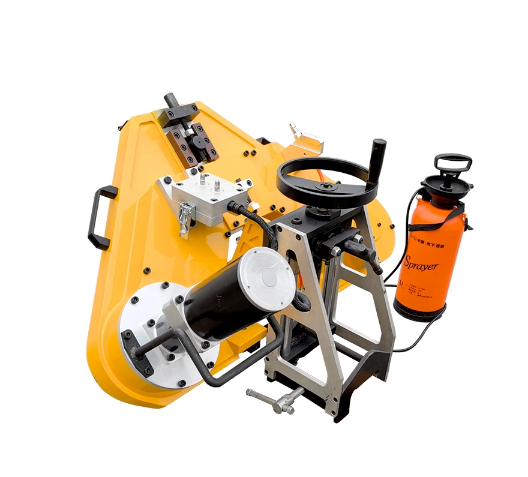
Track integrity relies entirely on the metallurgical quality of its weakest links: the joints and welds. Preparing a rail for thermite welding requires absolute dimensional precision. Operators must achieve perfectly square, zero-gap cuts to ensure parallel mating faces. The thermite chemical reaction requires a uniform gap, typically around 25mm (1 inch), to allow the molten steel to distribute heat evenly. Imperfect cuts create non-square faces, wide gaps, or rough edges featuring slag inclusions. These physical defects immediately compromise the weld structure. Under 20+ ton axle loads and cyclic high-speed traffic, a poor initial cut translates directly to internal micro-fractures. The joint will fail ultrasonic testing, requiring complete track replacement.
Maintenance crews constantly balance cutting speed against operational safety. Achieving fast, clean cuts demands high spindle rotation. A 16-inch abrasive blade operating at 5000 RPM generates massive kinetic energy. This high rotation speed introduces severe kinetic risks if the machine frame lacks stability. Robust, zero-play clamping systems provide the only defense against these forces. Whether using over-rail or under-rail mounting brackets, the clamp must lock the chassis immovably to the rail web. Any lateral base deflection or clamping play invites sudden blade binding. When an abrasive disc binds in the kerf at maximum RPM, it leads to violent kickback and shattered wheels.
Environmental and ergonomic constraints dictate equipment selection parameters. Track operators perform physically exhausting labor under harsh ballast conditions. A machine's weight-to-power ratio directly impacts job-site efficiency. Heavy, unbalanced saws cause rapid operator fatigue, leading to sloppy machine handling. Furthermore, prolonged exposure to heavy machine vibration causes Hand-Arm Vibration Syndrome (HAVS). Purchasing teams evaluate HAVS-compliant equipment featuring decoupled handles and anti-vibration rubber mounts to prevent long-term blood vessel damage. Protecting operators limits medical liabilities and ensures consistent cutting geometries throughout a long 12-hour shift.
| Defect Type | Root Cause | Consequence to Track Integrity |
|---|---|---|
| Non-Parallel Mating Faces | Lateral arm deflection or weak clamping brackets. | Uneven thermite heat distribution, leading to porosity. |
| Severe Heat-Affected Zone (HAZ) | Underpowered motor bogging down or glazed blade. | Brittle rail ends that shatter under heavy axle loads. |
| Slag Inclusions / Rough Edges | Gyroscopic wobble or operator forcing the blade. | Micro-fractures forming within the finished weld joint. |
The railway maintenance industry faces a major technological divergence. Procurement teams must choose between legacy gas power and emerging high-voltage battery platforms. Understanding the distinct operational parameters of each prevents costly asset misallocations.
| Specification Metric | Internal Combustion Models | Lithium Battery Models |
|---|---|---|
| Power Output | 70cc to 120cc (2-stroke/4-stroke) | 72V to 80V High-Torque Brushless |
| Operating Noise | 105+ dB (Requires double protection) | Sub-75 dB (Urban/night compliant) |
| Maintenance Overhead | High (Carburetors, filters, spark plugs) | Low (No engine fluids, sealed motors) |
| Ideal Environment | Remote off-grid, heavy-haul lines | Subways, tunnels, urban LRT networks |
The traditional Internal combustion rail cutter remains a fixture in railway engineering. These machines typically utilize robust 2-stroke or 4-stroke gas engines ranging from 70cc to 120cc. They deliver raw, unyielding torque and unmatched continuous runtime. As long as maintenance crews carry pre-mixed fuel reserves, these saws operate indefinitely without requiring complex electrical infrastructure. The 2-stroke variants provide high power-to-weight ratios, driving massive torque directly to the spindle pulley system.
Gas cutters dominate specific operational environments. They are the mandated choice for remote freight lines and heavy-haul corridors lacking power grids. They perform reliably in extreme cold weather, a scenario where lithium battery chemistry faces severe discharge limitations. When a job requires executing dozens of heavy-duty cuts over a continuous track possession window, the internal combustion engine supplies uninterrupted mechanical force.
However, legacy gas engines carry substantial financial and operational drawbacks. Maintenance overhead remains exceptionally high. Mechanics must constantly rebuild diaphragm carburetors, replace fouled spark plugs, and clean air filters operating in heavily abrasive steel-dust environments. Altitude changes severely affect fuel-to-air mixtures, requiring constant jetting adjustments. Gas saws also present severe safety risks due to engine inertia; the heavy flywheel keeps the blade spinning dangerously long after the operator releases the throttle. Finally, they generate noise exceeding 105 decibels. This noise level requires double hearing protection and triggers strict OSHA emissions bans in enclosed subterranean subway tunnels.
A modern Lithium battery rail sawing machine represents the absolute forefront of railway maintenance technology. These systems pair high-torque brushless motors with commercial-grade, high-capacity lithium battery packs built on 21700 cell architecture. Operating at 72V or 80V, their sustained power output rivals traditional 100cc gas engines. Advanced inverter technology ensures they achieve identical cut times on hardened high-carbon steel profiles.
Battery platforms excel in environments where gas equipment fails regulatory scrutiny. They serve as the legal standard for subway and metro systems where zero-emission policies govern enclosed spaces. They dominate urban night-time maintenance operations. Operating at under 75 decibels, they easily pass municipal noise abatement compliance laws. This acoustic reduction prevents neighborhood complaints and costly municipal work stoppages. Operators also benefit from push-button instant starts, entirely eliminating the exhausting process of cold-pulling a flooded gas engine in the rain.
Adopting this technology requires careful logistical planning. The initial capital expenditure (CapEx) for the battery ecosystem is high. High-amp power draws during heavy cutting can trigger thermal management systems, causing the Battery Management System (BMS) to throttle output to prevent cell damage. Procurement teams mitigate these drawbacks by investing in multi-port mobile fast-charging infrastructure. Crews rotate IP65-rated battery packs systematically, ensuring constant power availability during heavy track possessions.
Purchasing teams evaluate equipment based on strict mechanical parameters. Marketing claims regarding peak horsepower mean nothing if the machine cannot deliver precision under harsh ballast conditions. Use the following technical framework to vet potential equipment.
The clamping system dictates the dimensional accuracy of the entire operation. Articulated cutting arms must attach directly to rigid, self-aligning rail clamps. These mechanisms lock onto the rail web and head, establishing a perfect 90-degree reference plane. You must reject any machine exhibiting clamp deflection or base lateral play under load. Even a one-millimeter shift during the downward cutting stroke creates a non-square face. This violates the zero-gap rule required for seamless thermite welding. Under-rail clamps provide superior reference points on heavily top-worn transit rails, while over-rail clamps offer faster setup times in fully ballasted zones.
Cutting heavy-haul rails requires strict RPM management. The machine maintains a spindle speed between 4000 and 5000 RPM under load, translating to roughly 18,000 Surface Feet Per Minute (SFPM). This specific velocity prevents abrasive wheels from glazing over. The saw must accommodate standard 14-inch (350mm) or 16-inch (400mm) blades. Verify the arbor size is an industry standard like 1-inch or 25.4mm. Proprietary arbor sizes restrict your ability to source third-party consumables, resulting in severe vendor lock-in. Ensure the machine features an easily accessible spindle lock for rapid, on-track blade changes.
Engage the manual or electronic spindle lock to freeze arbor rotation completely.
Loosen the primary retention nut using a single-tool wrench provided in the kit.
Remove the spent abrasive wheel and physically inspect the mounting flanges for steel debris.
Seat the new 14-inch or 16-inch blade squarely on the standard arbor.
Tighten the retention nut strictly to the manufacturer-specified torque limit.
Active operator safety features represent mandatory requirements for modern procurement. Base requirements include heavy-duty centrifugal clutches that prevent stalling. Equipment must feature fully enclosed magnesium blade guards with directional spark deflectors to protect trackside personnel from high-velocity debris. Mandate an electronic blade brake for battery models. Traditional gas saws coast for a dangerously long time after the trigger release. An electronic braking system stops a spinning 16-inch blade in mere seconds, drastically reducing the risk of deep lacerations during tool repositioning.
Evaluate equipment based on extreme time constraints. A standard emergency repair scenario demands completing a clean cut and drilling precision splice holes in under 25 minutes total before the next scheduled train arrives. Weight and setup speed govern this timeline. A machine exceeding 25 kg (55 lbs) mandates a two-man lift, which slows deployment and requires larger response crews. The ideal rail saw balances raw cutting power with lightweight aluminum or magnesium alloy frames to ensure rapid setup.
Minute 0-3: Track inspection, machine deployment, and clamp securement.
Minute 3-5: Engine startup, zero-point alignment, and blade scoring.
Minute 5-7: Primary cutting execution, maintaining continuous downward pressure.
Minute 7-10: Machine detachment, joint inspection, and rail end deburring.
Minute 10-25: Drilling splice holes and bolting the insulated joint.
B2B purchasing decisions look beyond the initial manufacturer invoice. Calculating a true 5-year Total Cost of Ownership separates profitable field investments from ongoing corporate liabilities.
Initial capital expenditure rarely exposes the whole financial narrative. Gas-powered saws feature lower initial purchase prices but carry punishing operational expenses (OpEx). You factor in the ongoing costs of pre-mixed fuel, synthetic 2-stroke oils, spark plugs, filters, and routine carburetor rebuilds. Conversely, battery-powered machines demand a higher initial CapEx for the chargers and power packs. However, they eliminate liquid fuel logistics entirely and require zero internal engine maintenance. Over a 5-year lifecycle, high-voltage battery fleets routinely demonstrate massive cost reductions.
| Expense Category (5-Year Projection) | Internal Combustion Fleet ($) | Lithium Battery Fleet ($) |
|---|---|---|
| Initial Unit CapEx | $2,200 | $3,800 |
| Energy Costs (Fuel vs. Electricity) | $3,500 (Gas/Oil Mix) | $300 (Grid Electricity) |
| Engine Maintenance & Parts | $1,800 (Carbs, Filters, Plugs) | $250 (Belts, Brushes) |
| Estimated 5-Year Total Cost | $7,500 per unit | $4,350 per unit |
Abrasive cutting wheels represent a massive recurring operational expense. Track saws that bog down under load cause blades to bind, overheat, and disintegrate rapidly. High-quality rail saws utilize torque-sensing technology or heavy internal flywheels to maintain constant RPM during the cut. Maximizing torque stability under heavy downward load directly extends the lifespan of expensive abrasive wheels. This torque management significantly reduces your cost per cut and minimizes track-side blade change interruptions. If your fleet consumes three blades per single rail cut, the machine lacks sufficient motor torque.
Forward-thinking procurement teams look for telemetry integration. Smart battery rail saws incorporate Internet of Things (IoT) sensors and Bluetooth module connectivity. Fleet managers use dedicated mobile APIs to track total charge cycles, monitor internal stator temperatures, and log diagnostic error codes. This data enables predictive maintenance protocols. Maintenance crews receive automated alerts regarding failing spindle bearings or degrading battery cells well before a catastrophic tool failure occurs on the track.
Not every railway contractor needs to own a fleet of heavy-duty saws outright. Apply a strict financial threshold calculation to determine asset allocation. Evaluate your historical dispatch data. If your maintenance crew executes fewer than 40 emergency cuts or isolated track possessions per calendar year, leasing equipment represents a smarter capital strategy. If your volume exceeds this threshold, outright B2B purchasing becomes financially viable, provided you secure strong commercial warranty protections.
Sourcing reliable heavy machinery requires aggressive vendor vetting. Deploying a cheap saw from an unverified manufacturer costs ten times its purchase price in train delay penalties.
Never rely on a vendor's internal testing marketing. Demand hard proof of regulatory standards. The equipment must carry valid ISO 9001 manufacturing certificates and CE marking for electrical safety compliance. For railway-specific applications, look for EN 13215 railway standards or regional approvals like AREMA Chapter 4 requirements in North America. Instruct your buyers to verify the origin of core internal components. A machine's long-term reliability hinges on utilizing imported, high-load European or Japanese bearings (e.g., SKF or NSK) rather than generic, unbranded equivalents.
Price-only purchasing strategies inevitably fail in heavy industry. You negotiate defensive contract terms. Demand a minimum 12-month commercial warranty covering extreme trackside use and ballast exposure. Service Level Agreements (SLAs) guarantee a maximum 48-hour parts dispatch window for critical components. Ensure the supplier offers dedicated remote technical guidance for field mechanics facing on-site repairs. Include strict financial penalty clauses in your purchasing contracts, demanding a 5% invoice credit for any vendor delivery delays that impact your track possession schedules.
Never purchase a fleet without conducting a live trackside demonstration on your specific heavy-haul rail profiles. Instruct your evaluating engineers to actively look for immediate dealbreakers.
Noticeable vibration, handle chatter, or lateral drift during the final 10% of the cut.
Clamping mechanisms that jam or require physical hammer strikes to release after the cut completes.
Excessive blade run-down time exceeding 10 seconds after the operator releases the throttle.
Engine bogging or stalling when applying standard downward operator pressure.
Battery thermal throttling indicators activating after only two consecutive cuts.
Procurement teams must shift from passive equipment purchasing to aggressive, data-driven fleet management. Secure your infrastructure investments by executing the following strict directives:
Audit your current track possession time limits across all active corridors to identify baseline efficiency bottlenecks and excessive cutting delays.
Calculate your fleet's annual consumable spend on abrasive blades to uncover hidden operational costs caused by underpowered, stalling equipment.
Mandate a 5-year Total Cost of Ownership (TCO) calculation for all future procurement bids, forcing vendors to disclose routine engine maintenance or battery replacement costs.
Request live, heavy-rail field demonstrations on your specific track profiles from fully certified B2B vendors to physically verify zero-deflection clamping.
Draft service level agreements (SLAs) that include strict financial penalties for any vendor delivery delays or missed parts dispatch windows.
A: A professional-grade saw utilizing a fresh 16-inch abrasive blade should complete a clean, zero-gap cut on a 136 RE or UIC 60 heavy-haul rail profile in 90 to 120 seconds. Times exceeding two minutes indicate inadequate motor torque, severe lateral binding, or a completely glazed abrasive wheel. Maintaining this specific time window is necessary to ensure operators do not artificially force the blade, which compromises the cutting angle and overheats the metal.
A: Yes. Cutting capability relies entirely on the quality of the abrasive or carbide-tipped blade and the sustained motor torque, not the original power source. Modern 72V and 80V brushless battery systems feature high-amp discharging that delivers output equivalent to 100cc gas engines. They easily slice through hardened steel profiles, including heavily worn curves and high-carbon transit lines, without bogging down during the cut.
A: Abrasive blades require immediate replacement when their functional diameter shrinks significantly, restricting the maximum cutting depth. Visual and operational indicators of a spent blade include drastically slower cut times, excessive sparking, physical binding in the kerf, and strong burning smells. Operators must never force a heavily worn blade through the rail web, as this drastically increases the risk of wheel shattering and operator injury.
A: Over-rail clamps mount directly onto the rail head. This configuration requires minimal ballast clearance but sits higher in the work zone. Under-rail systems secure completely beneath the rail base. This provides superior rigidity and establishes a perfectly square alignment immune to top-wear variations. However, under-rail systems require operators to physically dig out clearance space in the track ballast before mounting the machine.
A: Generally, no. Strict OSHA regulations and regional municipal safety standards heavily restrict or outright ban internal combustion engines in enclosed subterranean spaces. These regulatory bans prevent dangerous carbon monoxide build-up, eliminate hazardous exhaust particulate emissions, and protect operators from extreme noise amplification. Operating gas engines in confined tunnels requires complex ventilation equipment, making battery platforms the only legally viable alternative.
A: Local municipal noise ordinances frequently restrict night-time industrial operations to 75 decibels or lower. Traditional gas-powered saws easily exceed 105 decibels, violating these laws and immediately triggering residential complaints and costly work stoppages. Battery-powered units operate at approximately 75 decibels. This lower acoustic footprint allows maintenance crews to entirely bypass noise restrictions and legally maintain high-frequency urban night shifts without interruption.


