
close
Choose Your Site
Global
Social Media


Views: 0 Author: Site Editor Publish Time: 2025-12-15 Origin: Site


In railway track maintenance, tamping is one of the most important operations to ensure the stability and longevity of the track. Specifically, the tamping operation of the track bed plays a vital role in maintaining the correct alignment and level of the track while providing essential support to the rail and ties (also called track sleepers). A well-executed tamping operation can significantly extend the life of the track and improve the safety and efficiency of train operations.
At Tangshan Kuntie Technology Co., Ltd., we specialize in providing high-quality Hydraulic Turnout Tamping Machines that help maintain track integrity by using the most effective tamping techniques. This article will delve into the correct tamping techniques, focusing on how tamping operations are carried out in the track bed and their importance in railway maintenance.
Tamping refers to the process of compacting the ballast—the crushed stone or gravel that supports the track structure—beneath the track to ensure the track remains in the correct position and level. Tamping machines, such as the Hydraulic Turnout Tamping Machine, are used to lift, align, and compact the track bed by pushing the ballast under the track ties, which ultimately leads to a more stable and durable track.
The primary goal of tamping is to prevent the track from shifting or settling over time. With constant train traffic, weather conditions, and other factors, the track bed can become loose, uneven, and misaligned. Regular tamping ensures that the track stays in the correct position, preventing dangerous misalignments and helping to prolong the lifespan of the track and other railway infrastructure.
Ballast: Provides stability to the track and helps distribute the weight of the trains evenly across the track bed.
Track Ties/Sleepers: Support the rails and maintain the track's alignment.
Tamping Machine: The mechanical equipment that lifts and compacts the ballast beneath the track ties.
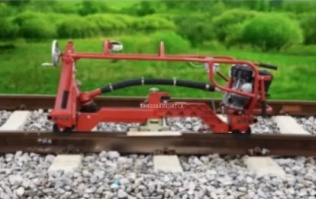
The tamping process consists of several crucial steps that must be carefully performed to ensure optimal track alignment and ballast compaction. These steps vary depending on the type of tamping machine used, but the basic procedure remains consistent.
The first stage of the tamping operation involves lifting the track. The tamping machine uses its hydraulic system to raise the track and track ties slightly above their current level. This step compensates for any settling or shifting of the track that may have occurred over time due to the weight of passing trains.
Purpose: Lifting the track restores it to the desired height and position before tamping begins.
Effectiveness: This step ensures that the track remains level and aligned after the tamping operation.
Once the track has been lifted, the tamping machine proceeds to compact the ballast beneath the track ties. Hydraulic tampers or pneumatic tampers are used to press the ballast down firmly, pushing it beneath the ties and filling any gaps. The tampers work by applying downward force, which compacts the ballast tightly and holds the track in place.
Purpose: Compacts the ballast to prevent it from shifting or settling under the weight of passing trains.
Effectiveness: Proper tamping improves the track's stability and reduces the need for frequent re-alignment.
After tamping the ballast, the tamping machine then aligns and levels the track to ensure it is straight and properly positioned. This step is crucial in maintaining the smooth and correct path of the track.
Purpose: Ensures that the track is not only stable but also level and correctly aligned for safe train movement.
Effectiveness: Track alignment is vital for reducing wear on the rail and wheels and preventing derailments or accidents.
Once the track has been aligned, tamped, and leveled, the tamping machine gently releases the track, allowing it to settle into its newly compacted ballast bed. The track is now stable and securely positioned in place.
Purpose:The purpose of releasing the track is to allow it to settle into the newly compacted ballast without shifting. This step ensures that the track remains firmly in place, ready for use by trains.
Effectiveness: This final step ensures the long-term stability of the track by maintaining the compactness of the ballast.
Successful tamping relies on several key factors that influence the quality of the operation. These include:
The type of tamping machine used and its hydraulic system determine the efficiency and effectiveness of the tamping process. A Hydraulic Turnout Tamping Machine, for example, provides precise control over the tamping action, ensuring that the ballast is compacted evenly and the track is properly aligned.
Efficiency: Machines with hydraulic systems offer greater power and precision compared to mechanical tamping methods.
Consistency: Hydraulic machines can deliver consistent pressure, ensuring that each section of the track receives uniform treatment.
The condition of the ballast plays a critical role in the tamping process. Over time, ballast can break down, become contaminated, or become loose, making it more difficult to achieve optimal compaction.
Best Practices: Before tamping, it is important to inspect the ballast and, if necessary, replace or clean it to ensure the tamping machine can work efficiently.
Effectiveness: Well-maintained ballast ensures better compaction and a more stable track bed.
Proper track alignment is necessary for effective tamping. If the track is significantly misaligned or damaged, additional steps may be required before tamping to restore the correct position and height.
Pre-Inspection: It’s essential to inspect the track for any significant issues before beginning the tamping operation.
Effectiveness: Proper alignment ensures that the tamping process results in a level, well-aligned track.
The tamping operation is not a one-time fix but a routine process that must be repeated regularly to maintain the track's integrity. Regular tamping ensures that the track bed remains stable, and the ballast stays compact, which ultimately helps prevent issues like track misalignment, settlement, or wear.
With the continuous passage of trains, the track can settle or shift over time. Regular tamping helps correct these changes by lifting and re-compacting the ballast.
Well-maintained tracks reduce the risk of derailments and other safety issues. Proper tamping ensures that the track stays stable, aligned, and at the right level, which is critical for maintaining the safety of both passengers and freight.
Regular tamping reduces the need for major repairs or complete track replacements, leading to significant cost savings in the long run. By addressing small issues early, tamping helps prevent larger, more costly problems.
The tamping operation of the track bed is a vital aspect of railway maintenance, ensuring the stability, alignment, and safety of the track. By using advanced equipment like the Hydraulic Turnout Tamping Machine, railway operators can effectively maintain their tracks, reduce the frequency of major repairs, and improve the overall safety of train operations.
At Tangshan Kuntie Technology Co., Ltd., we specialize in manufacturing advanced Hydraulic Turnout Tamping Machines that provide reliable and efficient solutions for track maintenance. Our machines are designed to ensure high-quality tamping operations, improving the compactness of the ballast and maintaining proper track alignment for years to come. If you're looking for efficient and cost-effective ways to maintain your railway tracks, our team is ready to assist you in finding the best solution for your needs.
Q1: What does a tamping machine do?
A1: A tamping machine is used to compact the ballast beneath railway tracks, ensuring the track remains stable, properly aligned, and level. This is essential for maintaining track integrity and improving safety.
Q2: How often should tamping be performed?
A2: The frequency of tamping depends on factors such as train traffic, weather conditions, and the type of track. Typically, ballast tamping is performed every 1-2 years for heavily trafficked lines.
Q3: Can a tamping machine fix all track issues?
A3: While tamping machines are highly effective at compacting ballast and aligning tracks, they cannot address structural damage or severe track issues. Regular inspections are necessary to identify and fix other problems before tamping.
Q4: Are Hydraulic Turnout Tamping Machines more efficient than manual tamping?
A4: Yes, Hydraulic Turnout Tamping Machines are much more efficient than manual tamping. They can cover large areas quickly, providing uniform compaction and precise track alignment, which is essential for large-scale railway systems.
Q5: Can tamping machines be used for different types of track systems?
A5: Yes, tamping machines are versatile and can be used for various types of track systems, including standard and narrow gauges. They can also be adapted for use in specific environments, such as curves or complex track layouts.


