
close
Choose Your Site
Global
Social Media


Views: 0 Author: Site Editor Publish Time: 2026-02-17 Origin: Site


Many people assume a ballast regulator simply moves stone along the track, but its real role is far more precise and critical. A ballast regulator shapes, redistributes, and finishes ballast to control drainage, stability, and inspection readiness. Modern railways rely on this final shaping step to lock in tamping and cleaning results under heavy traffic loads. In this article, you will learn what a ballast regulator actually does, why it defines final track quality, and how it fits into an efficient, long-term railway maintenance workflow.
A ballast regulator redistributes ballast to correct imbalances created by train loads, weather, and maintenance activity. Over time, ballast naturally shifts toward low-resistance areas. The machine uses controlled plough movements to push material back where it provides uniform support. This redistribution restores balance across the track section. When ballast is evenly positioned, rails sit on a consistent foundation. That balance reduces uneven settlement and supports predictable track behavior during daily operations.
Shaping ballast profiles is one of the most critical functions of a ballast regulator. It forms defined shoulders and slopes that guide water away from the track structure. Proper shaping prevents water from pooling near sleepers or beneath rails. At the same time, it locks ballast particles together, increasing resistance against lateral movement. This combination of drainage control and structural support keeps the track resilient during heavy rain and repeated axle loads.
A ballast regulator clears excess ballast from sleeper tops and fastening systems using a high-capacity broom system. Exposed sleepers allow inspectors to detect cracks, wear, or movement early. Clean fasteners ensure rail clips and anchors function as designed. Without this clearing step, inspections become unreliable and maintenance quality declines. The regulator ensures the track surface is clean, visible, and ready for inspection or further maintenance work.
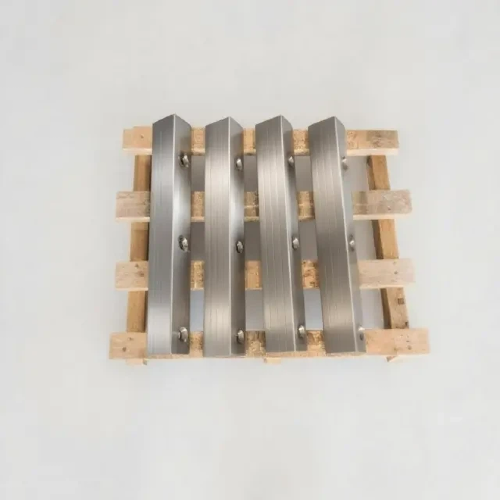
Track stability relies on a balanced interaction between vertical bearing capacity and lateral confinement. A ballast regulator maintains consistent ballast depth beneath sleepers, ensuring uniform vertical stiffness along the track. At the same time, it forms dense, continuous shoulders that provide lateral resistance against forces from acceleration, braking, and curvature. This confinement limits track shift and rotation, helping the rail structure maintain its designed alignment and position even as axle loads and traffic density increase.
Uniform load transfer is essential for controlling stress distribution within the track system. A ballast regulator redistributes ballast to create even contact beneath each sleeper, preventing isolated load peaks. By shaping ballast to consistent levels, it promotes predictable force paths from rail to sleeper and into the ballast bed. This reduces stress concentration, limits differential settlement, and stabilizes the track’s mechanical response under dynamic train loading.
Sustained track geometry depends on maintaining the intended ballast profile over time. A ballast regulator restores alignment, level, and cross-section after tamping or cleaning by reshaping and confining ballast in its designed form. Proper confinement slows ballast migration and preserves stiffness distribution along the track. As a result, geometry remains stable for longer periods, corrective maintenance cycles are extended, and train operations remain reliable under varying operational and environmental conditions.
After tamping compacts ballast beneath sleepers, the surface ballast is often uneven and loosely distributed. At this stage, a ballast regulator converts tamping results into a stable, service-ready track structure by reshaping and redistributing ballast. This step bridges structural correction and operational readiness, ensuring the benefits of tamping are preserved over time.
Aspect | Description | Typical Parameters / Data (Industry Ranges) | Practical Application | Operational Notes |
Work sequence | Ballast regulator operates immediately after tamping | Regulation performed within 1–24 hours after tamping | Locks in tamping results before ballast migration occurs | Delayed regulation allows early ballast displacement |
Ballast redistribution | Excess ballast is transferred to underfilled zones | Shoulder ballast depth typically 300–400 mm | Restores uniform sleeper support | Insufficient shoulder fill reduces lateral resistance |
Profile shaping | Formation of standard ballast shoulders and slopes | Typical slope 1:1.5 – 1:2 (V:H) | Improves drainage and shoulder confinement | Over-steep slopes may compromise stability |
Sleeper clearance | Removal of ballast from sleeper tops and fasteners | Broom working width approx. 2.6–3.0 m | Enables visual inspection and fastening access | Excessive broom depth may disturb compacted ballast |
Lateral stability | Compacted shoulders resist transverse forces | Effective shoulder width ≥ 350 mm | Enhances resistance to braking and curving forces | Curve sections require continuous shoulder control |
Operating speed | Regulation speed during shaping | Typical working speed 1.0–2.5 km/h | Balances shaping accuracy and productivity | Excessive speed leads to uneven profiles |
Geometry retention | Duration of maintained track geometry | 20–40% longer than tamping alone (verification required) | Extends maintenance intervals | Influenced by axle load and traffic density |
Applicable lines | Use across freight and mixed-traffic corridors | Common axle loads 20–30 t | Supports consistent geometry under heavy traffic | Higher-speed lines demand tighter tolerances |
Tip:Scheduling ballast regulation immediately after tamping significantly extends track geometry retention. On heavy-haul and high-density corridors, profile quality often has a greater impact on maintenance intervals than tamping depth alone.
Ballast cleaning systems remove fouled material, restore permeability, and reintroduce clean stone, but they do not control final geometry. After cleaning, ballast is often loosely placed and unevenly distributed. A ballast regulator completes the process by reshaping the ballast bed, rebuilding shoulders, and restoring standard cross-sections. This step ensures proper confinement, drainage paths, and uniform support beneath sleepers. Without regulation, clean ballast can still migrate or settle unevenly, reducing the structural and hydraulic benefits achieved through cleaning.
Effective maintenance depends on a logical sequence where each machine reinforces the previous step. Cleaners restore material quality, tampers rebuild vertical geometry, and ballast regulators stabilize the final shape. When this sequence is followed, rework is minimized and each pass delivers lasting value. Coordinated sequencing reduces redundant movements, shortens track possession windows, and limits disturbance of completed work. For high-traffic corridors, this systematic approach improves productivity while maintaining consistent geometry, drainage performance, and long-term track reliability.
Plough systems provide controlled movement of ballast by adjusting blade angle, height, and orientation relative to the track centerline. This adjustability allows operators to manage ballast flow without disturbing compacted layers beneath sleepers. By directing material laterally or longitudinally, ploughs help rebuild shoulders, fill voids, and maintain consistent ballast depth. Proper plough operation preserves particle interlock and frictional resistance, which are essential for lateral confinement and long-term stability under repeated axle loads.
Broom systems complete ballast regulation by removing loose material from sleeper surfaces and redistributing it into cribs or shoulder zones. This process improves visibility of sleepers and fasteners, supporting accurate inspections and reliable fastening performance. Controlled broom pressure and rotation prevent disturbance of compacted ballast while achieving a uniform surface finish. Beyond appearance, effective brooming contributes to consistent geometry retention and reduces the risk of ballast accumulation interfering with track components.
Hopper-equipped ballast regulators enable efficient collection and redistribution of surplus ballast during regulation. Captured material can be redeployed immediately to low areas along the same work section, maintaining uniform support without additional supply runs. This approach reduces material waste, minimizes transportation requirements, and supports continuous regulation over long distances. By balancing ballast quantities along the line, hopper systems help maintain consistent structural conditions across extended track segments.
A ballast plow is designed for rapid, large-scale ballast movement, typically during initial construction or heavy correction work. It shifts significant volumes efficiently but offers limited control over final geometry. A ballast regulator, by contrast, operates with finer adjustment of blade angles and working depth, allowing precise control of shoulder shape, crib filling, and ballast height. This precision is essential for meeting drainage and stability standards. While plows establish rough form, regulators finalize the ballast structure so it performs consistently under traffic and environmental loads.
In ballast maintenance, tampers and ballast regulators are often used together but serve fundamentally different mechanical purposes. Understanding how compaction and shaping interact helps maintenance planners sequence work correctly, achieve durable geometry, and avoid premature degradation of the ballast bed.
Dimension | Ballast Tamper | Ballast Regulator | Engineering Purpose | Key Considerations |
Primary function | Compacts ballast beneath sleepers | Shapes and redistributes ballast around sleepers | Structural strength vs geometric stability | Functions are complementary, not interchangeable |
Working zone | Below sleeper level | Sleeper surface, cribs, and shoulders | Separates load-bearing and confinement roles | Overlap may disturb finished work |
Mechanical action | Vertical vibration and squeezing | Lateral pushing, profiling, sweeping | Addresses different ballast behaviors | Incorrect sequencing reduces effectiveness |
Typical working depth | 200–350 mm below sleeper (varies by design) | Surface to shoulder zone, typically 0–400 mm | Ensures full ballast section is treated | Depth mismatch causes uneven support |
Vibration / force | Dynamic vibration forces 20–35 kN per tine (typical range) | No vibration, purely mechanical shaping | Prevents ballast breakage at surface | Regulators should not disturb compacted zones |
Geometry correction | Restores level, alignment, cross-level | Preserves and stabilizes corrected geometry | Short-term correction vs long-term retention | One without the other shortens maintenance cycle |
Output condition | Dense but often uneven surface | Uniform profile with clean sleeper exposure | Strength plus inspectability | Skipping regulation hides defects |
Drainage impact | Indirect, via restored geometry | Direct, via shoulder and slope formation | Controls water flow away from track | Poor shaping increases fouling risk |
Typical operating speed | 0.5–1.5 km/h (tamping mode) | 1.0–2.5 km/h (regulation mode) | Precision over productivity | Excess speed reduces quality |
Use in maintenance cycle | Structural correction step | Finishing and stabilization step | Completes ballast maintenance loop | Reversing order degrades results |
Result if used alone | Strong but unstable ballast profile | Well-shaped but weak ballast support | Incomplete maintenance outcome | Leads to faster geometry loss |
Tip:For durable results, tamping should always be followed by ballast regulation within a short window. Compaction restores strength, but only shaping and shoulder formation can lock that strength into a stable, long-lasting track geometry.
The final ballast profile governs how effectively the track resists movement, drains water, and supports inspection activities. A ballast regulator establishes consistent shoulder geometry, uniform crib filling, and controlled ballast height relative to sleeper tops. These factors directly influence lateral confinement and long-term geometry retention. Precise profiling also ensures that ballast particles interlock as intended, maintaining permeability while providing structural restraint. By setting this final condition, the ballast regulator determines how well the track withstands traffic loads and environmental effects over extended service periods.

Effective drainage depends on well-defined ballast shoulders, correct slope geometry, and sufficient void space between particles. A ballast regulator creates uniform cross-sections that promote rapid surface runoff and vertical drainage through the ballast layer. By preventing water retention near sleepers, it limits fine particle migration and reduces ballast fouling. Improved drainage also protects the subgrade from saturation, which helps maintain bearing capacity and stiffness. Over time, controlled water flow stabilizes the entire track structure and supports reliable performance under varying weather conditions.
Rail and sleeper durability is closely linked to how evenly loads are distributed through the ballast bed. A ballast regulator redistributes material to ensure consistent support along the track, reducing localized stress concentrations. This uniform support lowers peak contact forces, limits vibration transmission, and slows fatigue development in rails, sleepers, and fasteners. Reduced differential settlement also minimizes bending stresses in sleepers. As a result, components maintain structural integrity longer, replacement cycles are extended, and overall lifecycle costs are reduced in a measurable and predictable way.
Stable ballast profiles play a direct role in ride quality and safety. When ballast is evenly shaped and confined, track geometry remains consistent under dynamic train loads. This reduces vertical acceleration, lateral movement, and wheel–rail force variation. Smoother geometry improves passenger comfort and lowers the risk of dynamic amplification that can accelerate wear or trigger safety concerns. For operators, consistent profiles also simplify monitoring and maintenance planning, creating a more predictable operating environment across both freight and passenger rail networks.
A ballast regulator is a precision finishing machine that defines final track performance after maintenance. It redistributes ballast, shapes drainage profiles, and ensures stable support, inspection readiness, and long-term geometry retention. By working with tamping and cleaning systems, it locks in maintenance results and reduces lifecycle costs. Tangshan Kuntie Technology Co., Ltd. offers ballast regulator solutions designed for accuracy, durability, and efficient operation, helping railway operators achieve reliable track performance and consistent maintenance quality across demanding service conditions.
A: A Ballast Regulator redistributes and shapes ballast to improve drainage, stability, and final track geometry.
A: A Ballast Regulator locks in tamping results by restoring proper ballast profiles and shoulders.
A: A Ballast Regulator forms standard slopes and shoulders that guide water away from sleepers.
A: Yes, a Ballast Regulator delivers precise finishing, while a plow performs rough ballast movement.
A: Ballast Regulator cost depends on size, automation level, and optional hopper or broom systems.


