
close
Choose Your Site
Global
Social Media


Views: 0 Author: Site Editor Publish Time: 2026-02-10 Origin: Site


Railway performance begins with stable track geometry, and the ballast regulator plays a decisive role in maintaining it. As global rail networks expand and maintenance windows become shorter, operators increasingly rely on advanced ballast regulator machines to deliver precise, repeatable ballast shaping at scale. In 2026, buying decisions are no longer driven by brand recognition alone, but by productivity, automation, and long-term operational value. This article explores the top ballast regulator manufacturers in 2026 and explains how leading suppliers differentiate themselves in real-world railway maintenance applications.
Performance remains the first benchmark when evaluating a ballast regulator manufacturer. A modern ballast regulator must achieve accurate ballast profiling in as few passes as possible, even under heavy or compacted ballast conditions. Operators expect stable plow response, consistent broom performance, and predictable results across long track sections. In 2026, leading manufacturers design machines that maintain output quality throughout extended shifts. They focus on hydraulic stability, balanced machine weight, and reliable control response, ensuring the ballast regulator delivers repeatable results regardless of weather, ballast type, or track geometry.
Technology innovation separates average suppliers from top ballast regulator manufacturers. Automation features now support operators by simplifying complex adjustments and reducing human error. Intelligent control systems allow precise positioning of plows, wings, and brooms. Digital interfaces improve visibility and decision-making during operation. In 2026, smart ballast regulator platforms integrate sensors and data feedback to enhance repeatability. These systems help crews work faster while maintaining consistent outcomes, especially on projects requiring strict tolerance and uniform track geometry across large networks.
A proven global track record signals trust and reliability. Top ballast regulator manufacturers operate across regions with different rail standards, ballast materials, and maintenance practices. They adapt designs to meet regional requirements without compromising performance. Real-world deployment on mainline railways, high-speed corridors, and freight networks demonstrates machine resilience. In 2026, buyers increasingly value manufacturers that show long-term success across diverse markets, supported by documented project references and repeat customers.
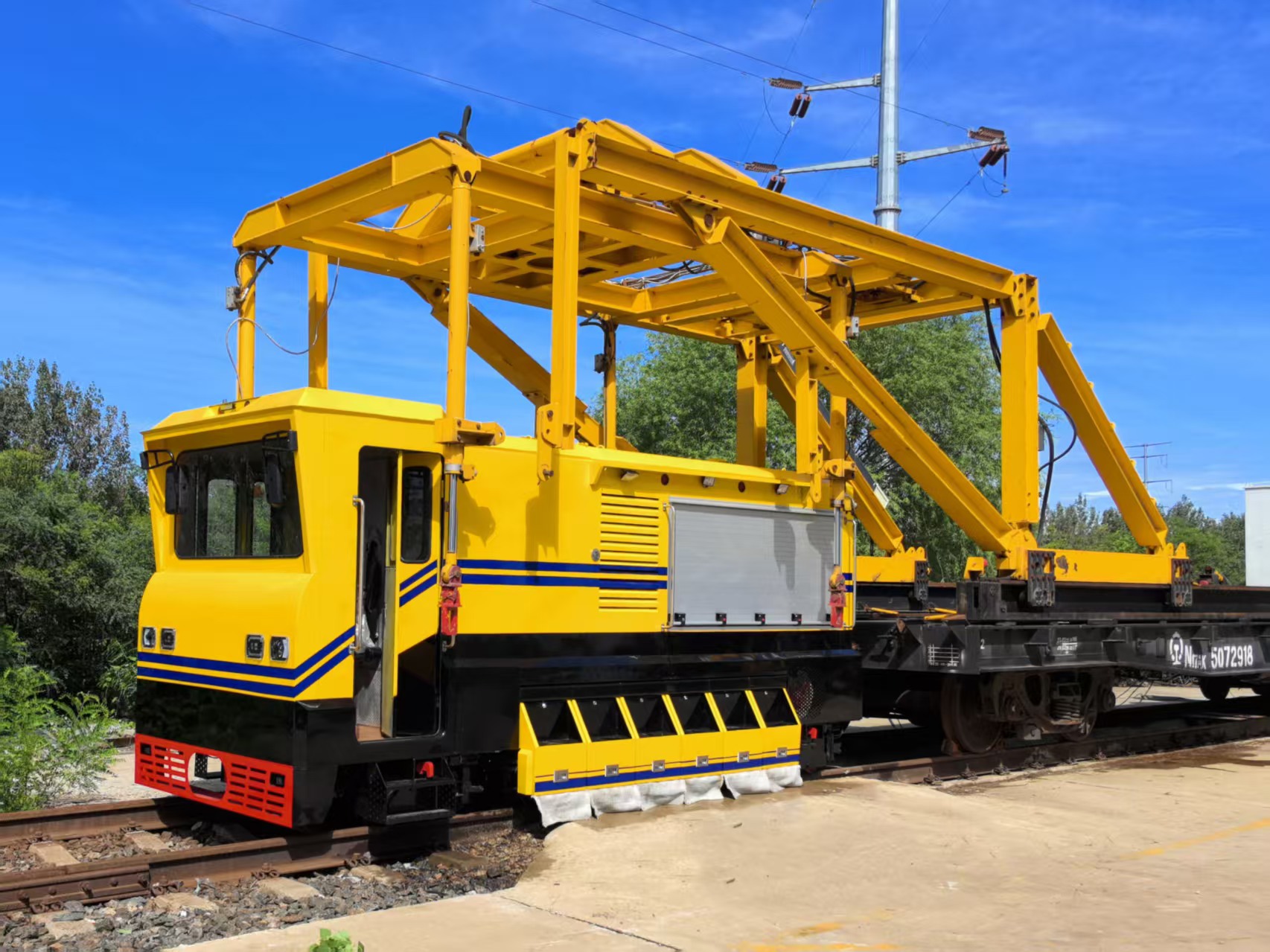
Nordco remains a dominant ballast regulator manufacturer in North America. Backed by the Wabtec Group, it benefits from deep maintenance-of-way experience and strong integration across rail equipment portfolios. Nordco ballast regulators are widely used by freight and passenger rail operators who prioritize reliability and service access. Their machines emphasize operator familiarity, consistent performance, and integration with existing maintenance fleets. In 2026, Nordco continues to appeal to buyers seeking proven solutions backed by a large industrial ecosystem.
Progress Rail, through its Kershaw brand, is recognized for precision-oriented ballast regulator designs. Kershaw machines emphasize modular configurations and adaptable plow systems. This allows operators to tailor machines to specific ballast profiles and operating conditions. In 2026, Kershaw ballast regulators remain popular for projects requiring dependable shaping performance and standardized maintenance practices. Their technology-driven approach supports predictable output and efficient crew workflows, especially across North American rail networks.
Plasser & Theurer represents premium engineering in the ballast regulator market. Known for advanced design and high manufacturing standards, their machines serve demanding environments such as high-speed rail and heavy-haul corridors. In 2026, Plasser ballast regulators are associated with precision, durability, and engineering depth. Operators value their ability to deliver consistent results under strict specifications. These machines often support complex maintenance strategies where accuracy and operational stability are essential.
Harsco Rail focuses on robust ballast regulator platforms built for intensive maintenance cycles. Their machines are designed for durability and long service life under challenging conditions. In 2026, Harsco ballast regulators are widely used in environments requiring sustained performance over long shifts. Operators appreciate their solid construction, predictable handling, and compatibility with large-scale maintenance programs. Harsco’s approach aligns well with contractors managing continuous track maintenance operations.
La Falco has gained recognition as a high-performance European ballast regulator manufacturer. Their machines emphasize strong engine output, efficient ballast handling, and flexible configurations. In 2026, La Falco appeals to buyers seeking a balance between performance and overall value. Their ballast regulators are designed to handle diverse track conditions while maintaining efficient workflows. This positioning makes them attractive for both national railways and private contractors operating across mixed networks.
Matisa brings decades of European expertise to ballast regulator manufacturing. Their machines focus on precise ballast shaping and stable operation. In 2026, Matisa ballast regulators are often selected for projects emphasizing accuracy and smooth integration with other track maintenance equipment. Their reputation is built on consistent engineering practices and long-term relationships with railway operators. This precision-oriented approach aligns well with regulated rail environments and modernization programs.
CRCC High-Tech Equipment stands out in the Asia-Pacific ballast regulator market. Supported by large-scale manufacturing capacity, the company delivers machines for rapidly expanding rail networks. In 2026, CRCC ballast regulators benefit from strong domestic deployment and growing international presence. Their ability to scale production and adapt to large infrastructure programs positions them as a key player in regions experiencing accelerated railway development.
As railway maintenance standards tighten, automation and intelligent control systems have become core capabilities of modern ballast regulators. These systems support operators by stabilizing output quality under varying conditions, reducing manual adjustments, and improving repeatability. Rather than replacing human control, they enhance decision-making through sensors, logic control, and real-time feedback, allowing crews to maintain productivity and precision across long work sections.
| System Module | Core Function | Typical Technical Parameters (Industry-Verified Ranges) | Application Scenarios | Operational & Application Notes |
|---|---|---|---|---|
| Automatic Leveling Control | Maintains consistent ballast profile height along the track | Vertical control accuracy: ±5–10 mm; Sensor update rate: 10–20 Hz | Mainline ballast profiling, high-speed rail maintenance | Height sensors require regular calibration to avoid cumulative error on uneven track |
| Intelligent Plow Position Control | Automatically adjusts front plow and side wing depth and angle | Hydraulic response time: <0.5 s; Adjustment angle range: ±25–30° | Variable ballast shoulders, different track cross-sections | Manual verification recommended in turnouts and complex geometries |
| Human–Machine Interface (HMI) | Centralized display for parameters, alarms, and system status | Screen size: 7–12 in; Protection class: IP65 or higher | Long-duration operations, night shifts | Operator training is required to prevent incorrect parameter input |
| Profile Memory & Repeat Mode | Stores and recalls predefined ballast profiles | Stored profiles: 10–50 sets; Recall accuracy: ±5 mm | Repetitive work sections, standardized corridors | Confirm rail type and ballast standard before switching profiles |
| Sensor Feedback System | Real-time monitoring of height, position, and hydraulic pressure | Displacement sensor accuracy: ≤1 mm; Pressure range: 0–350 bar | Precision shaping and quality assurance | Sensors must be shock-resistant and dust-protected for reliability |
| Coordinated Actuator Logic | Synchronizes plows, wings, and broom operations | Multi-actuator synchronization deviation: ≤2% | One-pass ballast shaping operations | Test runs recommended after software updates or logic changes |
| Semi-Automatic / Manual Override Mode | Allows instant operator intervention | Mode switching delay: instantaneous or <1 s | Special sections, emergency adjustments | Switch modes only under stable hydraulic load conditions |
Tip:When evaluating automated ballast regulators, prioritize systems that combine precise control with flexible manual override. The most effective solutions enhance consistency while allowing operators to adapt instantly to unexpected track or ballast conditions.
Environmental performance influences purchasing decisions more than ever. Modern ballast regulator machines integrate dust suppression systems to improve visibility and safety. These systems also support compliance with environmental standards. In 2026, manufacturers emphasize cleaner operation through optimized broom design and controlled ballast discharge. Such features protect workers, reduce site disruption, and enhance overall project quality.
High-speed mobility improves maintenance efficiency by reducing non-working travel time. In 2026, advanced ballast regulators support faster transit between work zones while maintaining stable operation during active work. Multi-function capabilities allow machines to perform additional tasks without redeployment. This flexibility supports tighter maintenance schedules and better resource utilization across rail networks.
Although the core function of a ballast regulator is shaping and distributing ballast, its real value appears in how well it performs across different maintenance scenarios. From standard ballast finishing to high-speed rail and multi-purpose network use, application requirements vary significantly. Understanding these differences helps buyers match machine capabilities to real operating needs.
| Application Scenario | Core Purpose | Key Technical Requirements | Typical Technical Parameters (Industry-Used Ranges) | Operational Focus Points | Application Notes |
|---|---|---|---|---|---|
| Track Ballast Finishing | Create smooth, uniform ballast profile for stability and drainage | Precise plow geometry, consistent broom action | Profile accuracy: ±10 mm; Working speed: 5–20 km/h; Broom rotation speed: 150–300 rpm | Finish quality, repeatability over long sections | Often performed after tamping; consistency over distance matters more than peak speed |
| High-Speed Rail Maintenance | Maintain tight geometric tolerances for safe high-speed operation | Vibration control, high-resolution sensors, smooth material flow | Height control accuracy: ±5 mm; Sensor resolution: ≤1 mm; Operating speed: 5–15 km/h | Alignment integrity, minimal disturbance | Requires stable hydraulic response and low oscillation under load |
| Multi-Purpose Network Use | Support multiple tasks across mixed track types | Flexible attachments, adjustable control logic | Plow angle range: ±25–30°; Wing extension range: 0–800 mm; Travel speed: up to 80–90 km/h (where permitted) | Adaptability, rapid configuration changes | Ideal for networks combining mainline, sidings, and secondary tracks |
| Long-Distance Mainline Sections | Continuous operation over extended track lengths | Thermal stability, hydraulic endurance | Continuous operation time: 8–10 h; Hydraulic pressure range: 250–350 bar | Output consistency, operator comfort | Operator fatigue management becomes critical |
| Curves, Turnouts, Complex Geometry | Accurate shaping in non-linear sections | Fine manual override, responsive control | Control response time: <0.5 s; Manual override delay: <1 s | Precision adjustments, situational control | Automation assists but does not replace skilled operation |
| Mixed Ballast Conditions | Handle varying ballast size and compaction | Strong plow force, adaptive control | Ballast size range: 25–65 mm; Plow penetration depth: up to 300 mm | Stable material flow, no clogging | Requires balanced machine weight and robust plow design |
Tip:When selecting a ballast regulator, align the machine’s primary design focus with your most frequent application scenario. A model optimized for high-speed rail precision may be unnecessary for routine ballast finishing, while a versatile multi-purpose unit can significantly improve fleet efficiency on mixed networks.
Project scale determines not only machine size, but also system configuration and utilization strategy. Large rail networks benefit from ballast regulators designed for high-duty cycles, with engines typically above 300 kW, reinforced hydraulic systems, and travel speeds exceeding 80 km/h for rapid repositioning. Smaller projects gain efficiency from lighter platforms that reduce fuel use and simplify transport logistics. In 2026, data-driven planning plays a growing role. Buyers assess annual track output, average shift length, and crew availability to right-size ballast regulator capacity, avoiding underutilization while ensuring sufficient productivity during peak maintenance periods.
Long-term return on investment is increasingly measured through operational metrics rather than upfront cost. A ballast regulator delivering higher mean time between failures and consistent performance can add hundreds of productive hours annually. Design improvements such as wear-resistant plow edges, modular hydraulic components, and condition-based maintenance monitoring reduce unplanned downtime. In 2026, operators often model ROI using indicators like cost per kilometer maintained, scheduled maintenance intervals, and fuel consumption per shift. Machines engineered for durability and predictable servicing cycles tend to stabilize budgets and improve planning accuracy over their full service life.
After-sales capability directly affects equipment availability and lifecycle cost. Effective support systems combine regional parts warehouses, trained field technicians, and standardized diagnostic procedures. In 2026, leading ballast regulator manufacturers integrate remote diagnostics and digital service records to shorten fault response times. This approach supports proactive maintenance and reduces dependence on emergency repairs. Strong global service coverage also simplifies operator training and spare parts planning across fleets. Over time, consistent support improves machine reliability, protects resale value, and strengthens long-term partnerships between suppliers and railway operators.
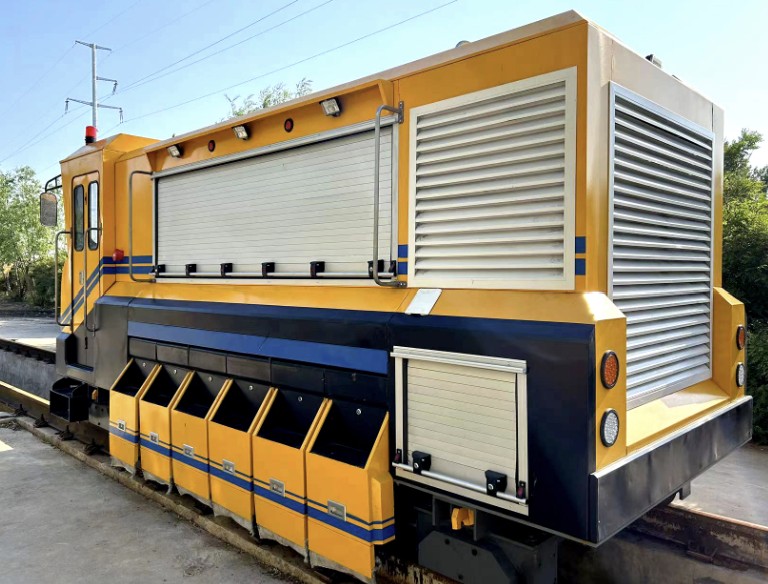
North America remains a technology-led market for ballast regulators, shaped by large freight networks and tight maintenance windows. Operators prioritize machines that deliver high daily output with minimal setup time. Automation, operator-assist controls, and reliable diagnostics are widely adopted to improve consistency across long track sections. In 2026, purchasing decisions are often guided by measurable productivity indicators such as kilometers maintained per shift and machine availability rates. Strong regional service infrastructure also plays a key role, supporting fast turnaround and predictable maintenance planning.
European ballast regulator demand is driven by strict regulatory frameworks and high expectations for track geometry accuracy. Machines are engineered to deliver repeatable results under narrow tolerance limits, especially on mixed-traffic and high-speed lines. Precision control systems, stable hydraulic response, and fine manual adjustment capabilities are essential. In 2026, manufacturers compete on their ability to meet standardized maintenance procedures while maintaining efficiency. Consistent output quality and compliance with safety and environmental standards strongly influence equipment selection across European rail networks.
Asia-Pacific represents the fastest-growing ballast regulator market, fueled by large-scale rail construction and network expansion. Operators require machines capable of sustained operation across long distances and varied track conditions. In 2026, manufacturers focus on scalable production, adaptable configurations, and efficient deployment for major infrastructure programs. High utilization rates and multi-shift operation are common, making durability and operational stability critical. This region increasingly shapes global demand by driving volume, influencing design priorities, and accelerating technology adoption across the ballast regulator industry.
The top ballast regulator manufacturers in 2026 stand out through precision, automation, and dependable service support. Buyers now focus on application fit, lifecycle value, and long-term efficiency rather than brand alone. Tangshan Kuntie Technology Co., Ltd. delivers practical ballast regulator solutions with stable performance, adaptable configurations, and responsive service, helping railway operators improve maintenance quality, reduce downtime, and achieve sustainable operational value across diverse rail networks.
A: Performance consistency, automation, global deployment, and strong service support define leading Ballast Regulator manufacturers.
A: A Ballast Regulator ensures stable track geometry, proper drainage, and long-term rail safety.
A: Automation helps a Ballast Regulator deliver repeatable profiles and reduce manual adjustment errors.
A: Yes, Ballast Regulator value depends on uptime, efficiency, and lifecycle operating costs.
A: A versatile Ballast Regulator with adjustable controls fits diverse track types and workloads.


