Introduction
Rail Grinding is no longer a reactive task reserved for visibly damaged tracks. It has become a strategic maintenance practice that directly influences safety, asset life, and operational efficiency. As rail networks face higher axle loads, denser traffic, and stricter performance demands, waiting for defects to appear creates unnecessary risk and cost. Regular Rail Grinding works as a preventive system that manages rail geometry, controls wear, and stabilizes wheel–rail contact. When applied consistently, it reduces lifecycle uncertainty, supports predictable maintenance planning, and strengthens long-term network reliability.
Extending Rail Service Life Through Preventive Rail Grinding
Eliminating Early-Stage Surface Defects Before They Propagate
Rail surfaces develop micro-level defects long before visible damage appears. These include shallow cracks, corrugation patterns, and localized material fatigue. Regular Rail Grinding removes this thin damaged layer early. It prevents small defects from growing into deep structural flaws. Once cracks extend below the surface, they accelerate rail degradation and shorten service life. By acting early, Rail Grinding keeps the rail head healthy with minimal material removal. This approach preserves steel volume while maintaining profile accuracy. Over time, it significantly delays the point at which rails must be replaced, improving asset utilization across the network.
Slowing Rolling Contact Fatigue to Maximize Rail Longevity
Rolling Contact Fatigue is one of the primary drivers of rail failure. It develops from repeated high-stress wheel contact at the same locations. Rail Grinding changes this stress pattern. By restoring the designed rail profile, it redistributes contact forces across a wider area. This reduces peak stress and slows fatigue accumulation. Regular Rail Grinding also removes fatigue-damaged steel before cracks can link together. As a result, fatigue progression remains controlled instead of accelerating. Many networks report rail life extensions of several years when preventive Rail Grinding is applied consistently.
How Regular Rail Grinding Doubles Effective Tonnage Capacity
Rail life is often measured by cumulative tonnage carried. Without Rail Grinding, fatigue and wear limit how much traffic rails can safely support. Regular Rail Grinding increases this capacity by keeping rails within optimal stress limits. It allows rails to carry more tonnage before reaching critical defect thresholds. In practice, this can double effective tonnage capacity in curves and high-load sections. This improvement does not require heavier rails or major upgrades. It comes from disciplined surface management and profile control through Rail Grinding.
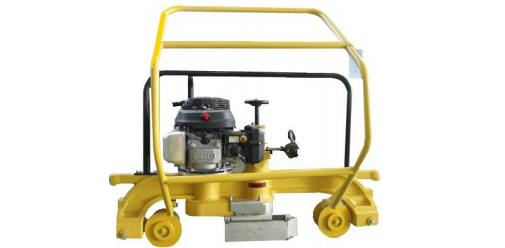
Optimizing Wheel–Rail Interaction for Stable Operations
Restoring the Optimal Rail Profile for Consistent Wheel Contact
Wheel–rail interaction depends heavily on rail profile accuracy. Over time, wear distorts the rail head shape. This leads to uneven contact and unstable forces. Rail Grinding restores the designed profile. It ensures wheels contact the rail at intended locations. This consistency improves force transfer and reduces random stress spikes. Stable contact also supports predictable vehicle behavior. With regular Rail Grinding, operators maintain a controlled wheel–rail interface that supports higher speeds and smoother operations.
Reducing Lateral Forces and Hunting Motion via Rail Grinding
Hunting motion occurs when wheelsets oscillate laterally at speed. It increases wear and reduces ride stability. Rail Grinding helps control this behavior by correcting profile deviations that trigger oscillation. When rail geometry matches wheel conicity, lateral forces decrease naturally. This stabilizes vehicle tracking and reduces vibration. Over time, it also lowers wear on wheels and suspension components. Regular Rail Grinding therefore contributes to both track and rolling stock stability.
Improving Curve Performance and Load Distribution
Curves experience concentrated forces that accelerate rail damage. Rail Grinding reshapes high and low rails to balance load distribution. It improves steering behavior and reduces flange contact. This lowers stress at the gauge corner, where failures often begin. With better load sharing, curves maintain integrity longer. Trains also move through curves more smoothly. This benefit is especially valuable for heavy-haul and mixed-traffic corridors.
Reducing Lifecycle Maintenance Costs Across the Rail System
Lower Rail Replacement Frequency Enabled by Rail Grinding
Rail replacement is one of the most expensive maintenance activities. Regular Rail Grinding delays this need by extending usable rail life. By managing wear and fatigue early, rails remain serviceable longer. This spreads capital costs over more years and more traffic. Operators avoid premature replacement driven by localized damage. Over an entire network, this reduction in replacement frequency translates into substantial budget savings.
Minimizing Wear on Fasteners, Sleepers, and Track Components
Track components respond directly to rail surface condition. Rough rails increase vibration and impact loads. These forces transfer into fasteners, sleepers, and ballast. Rail Grinding smooths the rail surface and stabilizes contact forces. This reduces dynamic loading across the track structure. Components last longer and require fewer interventions. Maintenance crews can focus on planned work instead of frequent reactive repairs.
Preventive Rail Grinding vs. High-Cost Emergency Repairs
When rail defects are not managed early, maintenance quickly shifts from planned work to emergency response. Preventive Rail Grinding keeps defect growth under control and stabilizes maintenance planning. In contrast, emergency repairs usually involve higher costs, operational disruption, and safety exposure. The comparison below clarifies these differences from an engineering and management perspective.
| Comparison Aspect | Preventive Rail Grinding | High-Cost Emergency Repairs |
| Maintenance trigger | Scheduled by tonnage or time (e.g. 5–20 MGT) | Triggered by defect exceedance or failure |
| Typical defects addressed | Early RCF cracks (<0.2 mm), light corrugation | Broken rail, deep shelling, severe spalling |
| Metal removal per intervention | 0.1–0.2 mm | Rail replacement or deep grinding >3–5 mm |
| Planning horizon | Long-term, predictable maintenance cycles | Immediate response, unplanned |
| Track possession needs | Short, planned windows | Extended closures or emergency blocks |
| Impact on train operations | Minimal speed impact | Speed restrictions, service suspension |
| Labor and equipment mobilization | Standard crews and grinding units | Large crews, cranes, replacement rail |
| Cost structure | Low, repeatable unit cost per km | Very high, project-style cost per incident |
| Typical cost ratio (indicative) | Baseline reference | 5–10× higher than preventive grinding |
| Safety exposure | Controlled, low-risk environment | Elevated risk during failure response |
| Effect on asset life | Preserves rail steel and delays renewal | Accelerates renewal due to steel loss |
| Budget predictability | High, easy to forecast annually | Low, difficult to budget accurately |
| Network reliability | Stable, fewer disruptions | Volatile, cascading operational delays |
Tip:Railway networks with dense traffic benefit most when preventive Rail Grinding is treated as a budgeted asset-protection measure. Even a small increase in planned grinding frequency can eliminate the far larger financial and operational impact of emergency rail replacement events.
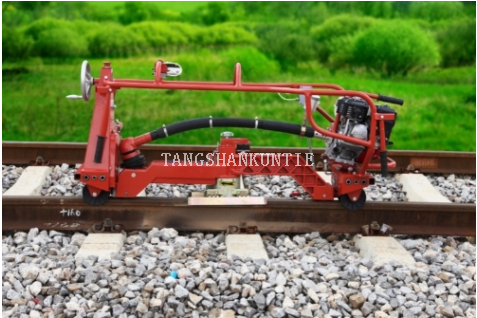
Enhancing Safety and Preventing Fatigue-Related Failures
Removing Surface-Initiated Cracks That Lead to Rail Breaks
Rail breaks typically originate from micro-cracks formed at the rail surface under repeated wheel loading. These cracks grow downward and inward as stress cycles accumulate. Rail Grinding removes the thin surface layer where crack initiation occurs, effectively resetting the fatigue process. By interrupting crack growth at an early stage, grinding prevents crack coalescence that can trigger sudden fracture. This approach is especially important in high-stress zones such as curves and weld transitions. Regular Rail Grinding therefore functions as an active safety control by reducing the probability of brittle rail failure under operational loads.
How Rail Grinding Strengthens Structural Integrity of the Track
Track structural integrity relies on stable load transfer between rail, fasteners, sleepers, and ballast. When rail geometry degrades, loads concentrate unevenly and accelerate component fatigue. Rail Grinding maintains the intended rail profile and running surface, allowing forces to distribute more uniformly along the track. This consistency limits stress peaks at critical contact points and reduces cumulative damage in supporting components. Over time, the entire track system responds more predictably to traffic loads. Rail Grinding strengthens structural performance without requiring changes to track layout or materials.
Reducing Derailment Risk Through Controlled Rail Geometry
Derailment mechanisms are closely linked to wheel–rail geometry, especially flange contact and wheel climb behavior. Worn or distorted rail profiles increase lateral forces and reduce guidance stability. Rail Grinding restores the designed rail shape, improving wheel guidance and maintaining proper contact angles. This is particularly effective in curves, switches, and high-load transition zones. Controlled geometry reduces the conditions that lead to flange climbing or track spread. With regular Rail Grinding, rail geometry remains within safe operating limits, lowering derailment risk and improving overall operational stability.
Improving Ride Quality While Reducing Noise and Vibration
Smoothing Corrugation to Reduce Wheel–Rail Impact Forces
Rail corrugation produces periodic contact irregularities that amplify dynamic wheel–rail forces at each wheel passage. These repeated impacts increase vertical acceleration and accelerate deterioration of fasteners, sleepers, and ballast. Rail Grinding removes the corrugated wavelength pattern and restores a uniform running surface. Once surface continuity is re-established, impact loads decrease and force transmission becomes smoother. This reduction limits vibration-induced fatigue in track components and lowers maintenance demand. From a mechanical standpoint, smoother rails reduce excitation frequencies that contribute to resonance, helping stabilize both vehicle motion and track structure under sustained traffic.
Rail Grinding’s Role in Noise Mitigation for Urban and Passenger Lines
Railway noise in urban environments is strongly influenced by surface roughness at the wheel–rail interface. Corrugation and surface defects increase sound radiation by exciting wheel and rail vibration modes. Rail Grinding addresses this at the source by reducing roughness amplitude and restoring consistent contact geometry. Lower surface roughness leads to reduced rolling noise and less high-frequency vibration. Compared with barriers or dampers, Rail Grinding offers system-wide noise reduction without altering infrastructure layout. For passenger corridors, this approach supports long-term acoustic control while maintaining operational flexibility.
Enhancing Passenger Comfort and Freight Stability Simultaneously
Ride comfort and freight stability share a common dependency on smooth wheel–rail interaction. Irregular rail surfaces generate vertical and lateral accelerations that affect both passenger comfort and cargo integrity. Rail Grinding minimizes these accelerations by stabilizing contact forces and reducing vibration transmission into vehicles. Passengers experience smoother motion and reduced noise, while freight benefits from lower dynamic loads that can shift or damage cargo. By improving the mechanical environment at the rail interface, Rail Grinding delivers consistent performance across passenger and freight operations without requiring separate maintenance strategies.
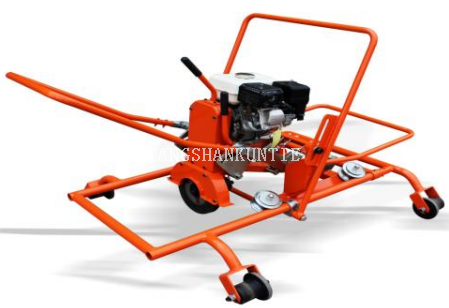
Why Regular Rail Grinding Delivers Compounding Long-Term Value
Preventive Rail Grinding vs. Corrective Grinding Outcomes
In day-to-day track maintenance, preventive and corrective rail grinding represent two very different asset-management strategies. The difference is not only frequency, but also how rail steel is protected, how defects are controlled, and how long-term costs evolve. The comparison below highlights practical applications, technical parameters, and operational impacts to support informed engineering decisions.
| Comparison Aspect | Preventive Rail Grinding | Corrective Rail Grinding |
| Primary objective | Control defects at an early stage | Restore rail surface after significant damage |
| Typical application | High-tonnage mainlines, heavy-haul routes, curved track | Sections with advanced corrugation, spalling, or severe RCF |
| Metal removal per pass | 0.1–0.2 mm | 0.5–4.0 mm, depending on defect severity |
| Grinding interval | 5–20 MGT (million gross tonnes) | Non-periodic, triggered by defect limits |
| Rail steel consumption | Very low, preserves rail head volume | High, rapid reduction of remaining rail height |
| Rolling contact fatigue control | Continuous suppression of crack initiation | Removes existing cracks but does not slow re-initiation |
| Rail geometry stability | Maintains stable wheel–rail contact over time | Geometry recovery is short-lived |
| Wheel–rail stress behavior | Lowers peak contact stress and redistributes load | Short-term stress reduction only |
| Operational disruption | Minimal, easy to integrate into planned windows | Significant, often requires speed restrictions |
| Impact on rail service life | Extends life by 5–8 years on many heavy-haul networks | Limited extension, mainly risk mitigation |
| Long-term maintenance cost | Lower, predictable cost curve | Higher, often followed by frequent interventions |
| Risk management approach | Proactive and predictable | Reactive and damage-driven |
Tip:For high-axle-load or high-traffic corridors, relying solely on corrective grinding can accelerate rail steel loss. A preventive rail grinding strategy, supported by corrective actions when needed, usually delivers the best balance between safety, cost control, and rail life extension.
Aligning Rail Grinding Cycles with Traffic Density and Rail Type
Effective Rail Grinding cycles are determined by cumulative loading, axle weight, and rail metallurgy rather than fixed calendars. High-density corridors accumulate rolling contact fatigue faster and therefore require shorter grinding intervals to control surface damage. Heavy-haul lines often adopt cycles based on million gross tonnes to maintain stable stress conditions. Rail type also influences frequency. Premium or head-hardened rails resist wear but accumulate fatigue more quickly, making preventive Rail Grinding especially important. Curvature further concentrates contact stress, so curved sections typically receive higher grinding priority. When cycles reflect real traffic and rail behavior, degradation rates slow and rail life becomes more predictable.
Rail Grinding as a Foundation of Sustainable Rail Maintenance Programs
Sustainable rail maintenance depends on managing degradation at its source rather than reacting to visible damage. Rail Grinding plays a central role by controlling surface defects and stabilizing wheel–rail interaction before structural risks develop. It works most effectively when integrated with inspection, lubrication, and condition monitoring programs. Grinding maintains rail geometry, lubrication reduces wear, and inspection verifies defect growth trends. Together, these measures create a closed maintenance loop that supports long-term performance. By relying on preventive Rail Grinding, networks reduce material waste, stabilize maintenance costs, and maintain consistent safety and service quality over time.
Conclusion
Regular Rail Grinding delivers longer rail life, lower maintenance costs, improved safety, and smoother ride quality by controlling defects at their source. It transforms rail maintenance from reactive repair into a predictable, preventive strategy that strengthens wheel–rail interaction and network reliability. Consistent grinding also supports sustainable asset management and stable operating budgets. Tangshan Kuntie Technology Co., Ltd. provides professional rail grinding solutions designed to help rail operators maximize infrastructure value, improve operational performance, and achieve long-term, efficient, and safe rail system management.
FAQ
Q: What is Rail Grinding and why is it important?
A: Rail Grinding is a preventive maintenance process that restores rail profile, controls defects, and improves safety, cost control, and asset life.
Q: How often should Rail Grinding be performed?
A: Rail Grinding frequency depends on traffic density, axle loads, and curvature, commonly planned by million gross tonnes to control wear early.
Q: What are the main benefits of regular Rail Grinding?
A: Rail Grinding extends rail life, stabilizes wheel–rail interaction, reduces maintenance costs, lowers noise, and improves operational safety.
Q: Is Rail Grinding more cost-effective than emergency repairs?
A: Rail Grinding costs far less than emergency repairs by preventing failures, reducing downtime, and enabling predictable maintenance planning.


