
close
Choose Your Site
Global
Social Media


Views: 0 Author: Site Editor Publish Time: 2026-03-03 Origin: Site


A stable and well-drained track structure is the foundation of a safe and efficient railway. Central to this is the precise profiling of the ballast, the crushed stone that secures sleepers and rails. In the past, this was a labor-intensive manual process. Today, the industry relies on high-output technology. The modern ballast regulator machine has transformed this critical task, ensuring consistency and speed that manual methods could never achieve. Understanding the capabilities of leading equipment is essential for any track manager. This guide evaluates the top-tier ballast regulators available in 2026, helping you optimize rail maintenance lifecycles, reduce operational downtime, and maximize your return on investment.
Operational Precision: Modern regulators must effectively arrange the track bed into shape to meet strict engineering tolerances.
Sleeper Longevity: Efficiently cleaning the surface of the sleepers and fasteners prevents premature component wear and inspection obstructions.
ROI Drivers: Evaluation should focus on rapid deployment, fuel efficiency, and the versatility of broom and plow attachments.
Safety & Compliance: Prioritizing machines that meet Tier 4 emissions and integrated safety monitoring systems.
A ballast regulator is far more than just a track cleaning machine. It is a specialized piece of heavy equipment engineered to perform several crucial functions that are integral to the health and safety of the railway. Its primary purpose is to shape and distribute ballast to a precise, engineered profile, ensuring the track structure can effectively manage the immense dynamic loads imposed by passing trains.
The ballast profile consists of three key areas: the shoulder, the crib, and the area under the sleepers. A ballast regulator uses its front plow and side wings (also called shoulder plows) to restore this profile. A full, well-compacted ballast shoulder provides the essential lateral stability that prevents the track from shifting sideways under load. The machine pulls ballast from the toe line up to the sleeper ends, fills the "cribs" (the spaces between sleepers), and sweeps the top of the sleepers clean. This process restores the track's cross-section, which is vital for proper drainage and load distribution.
Over time, tamping operations, train vibrations, and weather can cause ballast to become displaced. It is crucial to clean up the ballast scattered on the sleepers or fasteners. If left unchecked, this loose stone can interfere with inspections, accelerate the wear of fasteners and tie pads, and impede drainage. When ballast becomes clogged with fine particles like coal dust, sand, or degraded stone—a condition known as "fouled ballast"—it loses its ability to drain water. A regulator's powerful broom attachment is designed to sweep away this excess material, preserving the integrity of the track components and preventing costly drainage failures.
Ballast regulators rarely work in isolation. They are a key component of a larger surfacing gang, which typically includes a ballast tamper. After a tamper lifts and aligns the track to the correct geometry, it leaves behind a disturbed and uneven ballast profile. The regulator follows the tamper to finalize the job. It redistributes the disturbed ballast, rebuilds the shoulders, and performs a final sweep. This synergistic relationship ensures that the track is not only correctly aligned but also structurally stable and ready for traffic.
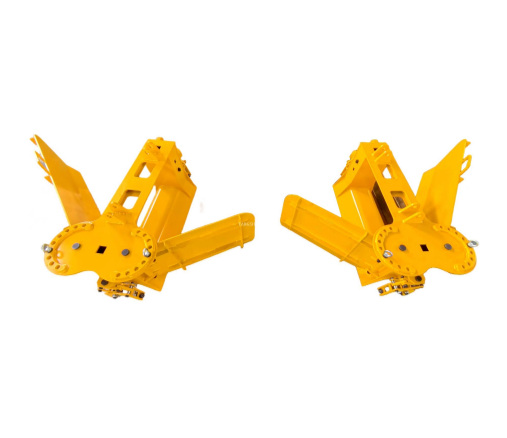
The market for ballast regulators features a mix of established industry giants and innovative specialists. The right choice depends heavily on your operational scale, track environment, and budget. Here’s a breakdown of the leading models and manufacturers shaping the industry in 2026.
These machines are designed for Class 1 railroads and high-density mainlines, where speed and one-pass efficiency are paramount.
Plasser & Theurer USP Series: Known globally for high-speed profiling, the USP series excels in mainline surfacing projects. A key feature is their often-integrated hopper, which can store and strategically redistribute excess ballast, minimizing waste and the need for additional work trains.
Loram RBC Series: Loram's regulators are engineered for immense productivity. Their "shoulder-to-shoulder" processing speed is a major selling point, allowing them to profile long stretches of track in a single shift. They are often praised for their robust construction and powerful broom systems.
Nordco M-Series: While Nordco produces machines for various applications, their M-series regulators have earned a reputation for compact reliability. They offer a balance of power and maneuverability, making them a popular choice for regional, short-line, and even some industrial applications where larger machines might be excessive.
These manufacturers offer machines with unique features tailored to specific challenges, such as complex yard layouts or high-speed rail tolerances.
Knox Kershaw KBR Series: Knox Kershaw regulators, like the KBR925, are frequently cited for their excellent operator visibility and ergonomic cab design. This makes them particularly effective in congested yards and switch areas where precise maneuvering and situational awareness are critical.
A standout feature of many Harsco models is their dual-direction or bi-directional capability. This allows the machine to work effectively in either direction without needing to be turned around, a significant time-saver in constrained work windows. Their robust wing reach is also a key advantage for profiling wide shoulders.
Matisa R Series: Reflecting their Swiss engineering heritage, Matisa regulators are built for precision. They are often specified for high-speed rail lines where track geometry tolerances are exceptionally strict. Their advanced control systems allow for highly accurate and repeatable ballast profiling.
The industry is also seeing innovation from other players. When evaluating any ballast regulator machine manufacturer, it's worth analyzing their focus on new technologies. Many emerging and established companies are now prioritizing Tier 4 Final compliant engines for reduced emissions and developing sophisticated automation features. These systems enable "one-pass" profiling, where the machine can complete the plowing, shaping, and brooming sequence more efficiently than ever before, reducing track time and labor costs.
Choosing the right machine involves looking past the basic specifications. True performance is found in the details of how the machine handles material, how it's controlled, and how efficiently it operates. A thorough evaluation should consider several critical factors.
The core function of the machine is to move ballast. The design of the plow and wings determines how effectively it can pull material from the toe line to the shoulder. More importantly, the broom system must be powerful enough to clean the surface of the sleepers without causing damage. Look for features like reversible broom direction, adjustable down-pressure, and durable broom elements that can handle abrasive ballast without premature wear. A high-quality broom will leave the fasteners and rail clips clear for inspection.
Modern regulators are increasingly equipped with advanced technology. GPS-guided profiling systems can automatically adjust the wings to a pre-programmed track design, ensuring perfect consistency over many miles. Automated wing control and joystick-based hydraulic systems reduce operator fatigue and the potential for human error. These features not only improve the quality of the work but also make it easier to train new operators.
A regulator's ability to manage ballast effectively is a key differentiator. Some models feature a central, reversible plow that can transfer excess ballast from one side of the track to the other, which is useful for balancing the profile around curves. Machines with integrated hoppers offer the greatest flexibility, allowing surplus ballast to be collected from one area (like a road crossing) and redeployed in another where it's needed, saving significant material costs.
There is always a trade-off between speed and precision. The machine must have a high travel speed to move quickly between job sites, minimizing its impact on revenue service. However, its work speed must be controllable and precise enough to effectively arrange the track bed into shape. Look for machines with hydrostatic drive systems that provide smooth, infinitely variable control during work, allowing the operator to match speed to ballast conditions.
| Evaluation Criterion | Basic Feature | Advanced Feature | Why It Matters |
|---|---|---|---|
| Broom System | Fixed-direction broom | Reversible, hydraulically-driven broom with adjustable down-pressure | Improves cleaning efficiency and reduces wear on broom elements. |
| Control System | Manual lever controls | Joystick controls with GPS-guided automated wing profiling | Reduces operator fatigue, improves consistency, and minimizes errors. |
| Material Handling | Standard shoulder plows | Integrated hopper and ballast transfer plow | Minimizes ballast waste and reduces the need for separate work trains. |
| Operator Environment | Basic cab | Climate-controlled, sound-dampened cab with ergonomic seating and 360-degree visibility | Enhances safety, comfort, and productivity during long shifts. |
The initial purchase price of a ballast regulator is only one part of the equation. A smart investment considers the Total Cost of Ownership (TCO) over the machine's entire lifecycle. Several factors drive long-term value and operational return on investment (ROI).
High-wear consumables like broom elements and plow blades will need frequent replacement. A well-designed machine provides easy access to these components, as well as to the engine, hydraulic filters, and grease points. A machine that is difficult to service will spend more time in the shop and less time on the track, directly impacting productivity. Look for centralized lubrication systems and logically laid-out hydraulic manifolds that simplify daily checks and repairs.
Fuel is a significant and ongoing operational expense. Modern Tier 4 Final diesel engines are not only cleaner but also significantly more fuel-efficient than their predecessors. An optimized hydraulic system that delivers power on demand, rather than running at full pressure continuously, can also lead to substantial fuel savings over the life of the machine. These efficiencies reduce costs and help meet corporate sustainability goals.
One of the most compelling ROI drivers is the ability of a single, high-capacity regulator to do the work of multiple older machines or a large manual labor crew. A powerful and versatile unit can reduce the required track possession "window" needed for maintenance. By completing the profiling and sweeping tasks faster, it allows for more track to be maintained per shift, ultimately reducing the labor cost per mile of track treated. Comprehensive rail maintenance programs benefit greatly from this increased efficiency.
The reputation of the manufacturer plays a significant role in a machine's long-term value. Brands known for their robust construction, reliability, and strong after-sales support tend to command higher resale values. Investing in a machine from a reputable builder with a proven track record ensures not only better performance during its service life but also a better return when it's time to upgrade the fleet.
Acquiring a new ballast regulator machine is more than a simple purchase; it's an integration into a complex operational ecosystem. Success depends on addressing several practical realities, from operator skill to regulatory compliance.
Operator Competency: Modern machines with automated systems have a learning curve. Even experienced operators will need thorough training on the new hydraulic controls, onboard diagnostics, and GPS-profiling software. Investing in manufacturer-led training is crucial to maximize the machine's capabilities and prevent costly operational errors.
Site Constraints: Not all regulators are suitable for all environments. A heavy-duty, wide-winged machine ideal for mainline work may be too large and heavy for operations in tight tunnels, on bridges with load restrictions, or within compact transit system corridors. The selection must match the machine's physical footprint and weight to the most common work sites.
Safety Protocols: Operating a ballast regulator involves inherent risks. The broom can throw ballast at high velocity, posing a hazard to ground crews and nearby infrastructure. Clear safety protocols, designated exclusion zones, and machines with excellent operator visibility are non-negotiable. Ensure the machine is equipped with adequate lighting, horns, and emergency stop systems.
Compliance Standards: All track work must adhere to strict regulatory standards, such as those set by the Federal Railroad Administration (FRA) in the U.S. or the American Railway Engineering and Maintenance-of-Way Association (AREMA). The regulator must be capable of creating a ballast profile that meets these requirements for shoulder width, slope, and crib fill.
With a clear understanding of the features, costs, and risks, you can develop a logical process for selecting the best machine for your needs. The final decision often comes down to matching the machine's capabilities to your specific operational context.
The primary distinction in machine selection is between mainline and yard/industrial use.
Mainline Work: This requires high-production machines with significant engine power, wide wing reach, and high travel speeds. The ability to work continuously over long distances is key. Features like integrated hoppers and automation provide the most value here.
Yard & Switch Work: This environment demands maneuverability and precision. A more compact machine with excellent visibility and bi-directional capability is often superior. The focus is less on outright speed and more on the ability to navigate complex track layouts and profile switches accurately.
While a new machine offers the latest technology and a full warranty, it also comes with the highest capital cost. An alternative is a "zero-hour" rebuild from a reputable ballast regulator machine manufacturer or a certified remanufacturing specialist. This process involves stripping an older machine down to its frame and rebuilding it with new or re-certified components, including a modern engine and updated control systems. This can offer performance comparable to a new machine at a significantly lower initial cost.
After narrowing down the options based on the criteria above, the final steps should be hands-on and data-driven.
Conduct Field Demos: Arrange for demonstrations of your top choices on your own track. This is the best way to assess real-world performance and get feedback from your operators.
Review Telematics Data: Ask for telematics data from existing users to verify claims about fuel consumption, engine hours, and productivity.
Verify Local Support: Confirm the availability of local or regional service support and parts inventory. A machine is only as good as the support network behind it. Downtime waiting for a part from overseas can negate any initial cost savings.
Selecting the right ballast regulator is a strategic decision that directly impacts track stability, safety, and long-term maintenance costs. The ideal machine does more than just move stone; it transforms track maintenance efficiency. By moving beyond simple metrics like horsepower and focusing on criteria like broom efficiency, automation, and total cost of ownership, you can make a more informed choice. The ultimate goal is to invest in a reliable, high-performance asset that enhances your operational capability and delivers a strong return for years to come. Remember to look past the initial price tag and prioritize long-term reliability and performance.
A: A ballast regulator is typically used immediately following any tamping operation to restore the ballast profile. In a proactive maintenance cycle, this might occur every 1 to 3 years on mainline track, depending on tonnage and track condition. It is also used for spot maintenance, such as cleaning up after ballast drops or correcting drainage issues.
A: The primary cause is abrasion from contact with sharp, hard ballast. Wear is accelerated by excessive down-pressure, high rotational speeds, and operating in heavily fouled or wet ballast, which creates a more abrasive slurry. Using durable, high-quality broom elements and proper operator technique can significantly extend their service life.
A: While a regulator can operate in these conditions, its effectiveness is reduced. Wet, fouled ballast is heavy and sticky, making it difficult for the plow to move and the broom to sweep cleanly. In heavily fouled sections, a regulator's work is often a temporary measure preceding a more intensive solution like undercutting or shoulder cleaning.
A: A single-directional regulator has a dedicated "front" and can only perform its full range of functions efficiently while traveling in one direction. A bi-directional machine is designed with a symmetrical cab and control layout, allowing the operator to work with equal efficiency in either direction without turning the machine around. This is a major advantage in tunnels or on single-track lines.
A: Many regulators can be fitted with a snow plow or use their standard ballast plow and powerful broom to clear snow from the tracks. They are highly effective at clearing switches, yard tracks, and road crossings. Their on-rail capability allows them to reach areas inaccessible to road-based snow removal equipment, making them a versatile tool for winter operations.


