
close
Choose Your Site
Global
Social Media


Views: 0 Author: Site Editor Publish Time: 2026-02-17 Origin: Site


Railway maintenance decisions shape safety, ride comfort, and asset value across rail networks. Engineers often debate whether a ballast regulator or a tamping machine delivers greater impact in daily operations. This article examines the key differences between ballast shaping and track geometry correction. You will learn how a ballast regulator supports drainage, stability, and ballast structure, while tamping restores precise alignment and level. Used together, they create durable, efficient, and repeatable maintenance results.
A Ballast Regulator manages ballast behavior on and around the track structure. It redistributes stone, shapes shoulders, and refines surface profiles. This work improves lateral resistance and drainage performance. By moving excess ballast away from sleepers, it keeps the track bed clean and stable. The regulator focuses on how ballast supports rails under repeated loads. Its actions influence settlement rates and long-term alignment retention across busy corridors.
A tamping machine works below the sleepers to restore track geometry. It lifts rails and sleepers, then compacts ballast beneath them using vibrating tines. This process corrects line and level to design values. The result is immediate improvement in ride quality and load distribution. Tamping concentrates on internal support conditions. It does not shape shoulders or manage surface ballast. That distinction defines its role in the maintenance process.
The Ballast Regulator and tamping machine address separate aspects of track behavior. One shapes the ballast environment. The other stabilizes track position. Geometry without proper ballast form degrades quickly. Ballast shaping without geometry correction fails to improve ride quality. Their objectives connect through load transfer and settlement control. Coordinated use aligns short-term precision with long-term resilience, reducing repeat maintenance needs.
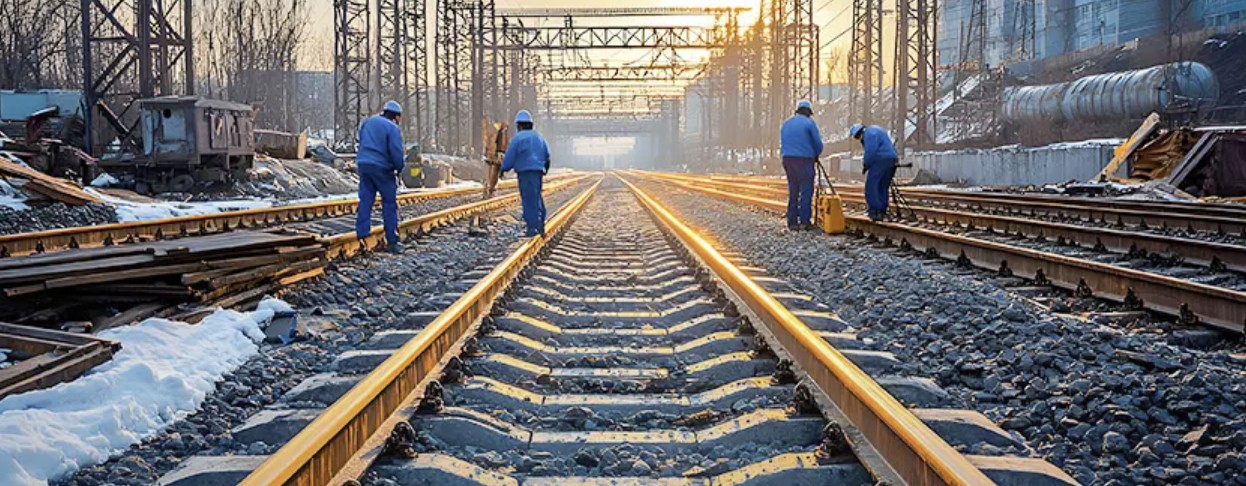
A Ballast Regulator forms shoulders to defined angles and heights. Proper shoulders resist lateral rail movement caused by braking forces and thermal expansion. They distribute loads evenly across the ballast bed. Over time, this reduces deformation and track shift. Shoulder shaping is structural, not cosmetic. Consistent profiles support higher speeds and heavier axle loads. They also help preserve alignment achieved during earlier tamping operations.
Clear sleepers are essential for inspection and fastening performance. A Ballast Regulator removes loose stones from sleeper tops and cribs. This exposes fasteners, pads, and sleeper surfaces. Inspectors gain clear visibility for condition assessment. Clean sleepers also prevent abrasion and uneven load paths. This function supports preventive maintenance and compliance. Tamping machines do not perform sleeper clearing, which makes regulation essential for inspection readiness.
In practical track maintenance, tamping and ballast profiling act on different layers of the ballast system. One corrects geometry below the sleepers, while the other governs surface shape, drainage, and lateral stability. A clear technical comparison helps explain why tamping alone cannot deliver durable results.
Comparison Aspect | Tamping Machine (Below-Sleeper Action) | Ballast Regulator (Ballast Profiling Action) |
Primary working zone | Ballast directly beneath sleepers | Full ballast cross-section: shoulders, slopes, crib areas |
Main engineering function | Consolidate ballast and restore vertical and horizontal geometry | Shape, redistribute, and stabilize ballast surface geometry |
Influence on drainage | No direct control of drainage paths | Forms standard ballast slopes (typically 1:1.5–1:2) to ensure effective water runoff |
Ballast moisture control | Indirect and temporary | Reduces water retention; supports target ballast moisture levels often below ~5–8% by volume (site-dependent, verified in practice) |
Shoulder formation | Does not create or restore shoulders | Builds and maintains shoulder width commonly 300–450 mm, depending on line class and axle load |
Resistance to ballast migration | Ballast may loosen and migrate after traffic | Profiles prevent stone movement toward sleepers and fasteners |
Effect on lateral track resistance | Limited; depends on existing shoulder condition | Increases lateral resistance through properly compacted and shaped shoulders |
Impact on geometry retention | High short-term accuracy; faster degradation without profiling | Extends geometry life by stabilizing ballast structure around corrected track |
Response to traffic loading | Effective under initial loads | Maintains stability under repeated cyclic loads and braking forces |
Role in maintenance sequence | First-stage correction of alignment and level | Final-stage stabilization and protection of tamping results |
Typical performance timeframe | Immediate improvement after intervention | Long-term performance preservation between maintenance cycles |
Risk if used alone | Faster loss of geometry due to poor drainage and weak shoulders | Not intended to correct geometry, but ensures durability once geometry is set |
Tip:If tamping is treated as a standalone solution, geometry often degrades faster due to unshaped shoulders and poor drainage. Using a Ballast Regulator to profile ballast after tamping effectively “locks in” geometry, reducing repeat interventions and extending maintenance intervals under real traffic conditions.
Tamping machines use lifting and lining systems guided by measurement data. They raise the track to target levels and correct lateral alignment. Vibrating tines compact ballast beneath sleepers to lock the track in position. This restores geometry within tight tolerances. The process improves ride comfort and reduces dynamic forces. However, its effect remains concentrated below sleepers rather than across the full ballast bed.
Tamping stops at sleeper support. It does not control shoulder shape, slope angles, or ballast cleanliness. After tamping, ballast may remain uneven along the track. This limits lateral resistance and drainage efficiency. A Ballast Regulator addresses these surface conditions. Together, they manage both internal and external ballast behavior. Recognizing where tamping stops prevents gaps in maintenance execution.
Correcting track geometry establishes accurate rail position, but long-term stability depends on the condition of the surrounding ballast. After tamping, ballast particles are temporarily loosened and more susceptible to movement under traffic and environmental loads. A Ballast Regulator reorganizes this ballast into a controlled cross-section, rebuilding shoulders and restoring drainage paths. This stabilizes load transfer and limits ballast displacement. By controlling settlement behavior and moisture flow, regulation ensures geometry corrections remain effective over extended service periods.
Tamping is typically scheduled first because track geometry defines the reference condition for all subsequent ballast work. By lifting and aligning the track to design values, tamping establishes correct sleeper elevation and spacing. This creates a stable framework for shaping the ballast bed. If ballast regulation is carried out before geometry correction, reshaping work may be disrupted by later lifting actions. Placing tamping first reduces rehandling of ballast and supports a logical, measurement-driven maintenance workflow.
After tamping, ballast around sleepers and shoulders is often loosened and uneven. A Ballast Regulator restores structural order by redistributing ballast into its final profile. It reforms shoulders to provide lateral resistance and clears sleeper surfaces to improve inspection and fastening performance. Proper profiling also re-establishes drainage gradients, limiting water retention. This stage transforms short-term geometry correction into a stable track condition that can sustain repeated traffic loads without accelerated settlement.
Sequential use of tamping followed by ballast regulation improves maintenance efficiency across the track life cycle. Geometry corrections last longer because the surrounding ballast structure is stabilized. Crews face fewer recurring defects, allowing longer intervals between interventions. Standardized ballast profiles also simplify inspections and future maintenance planning. As a result, track availability increases, operating disruptions decrease, and maintenance resources can be allocated more predictably across the network.
A Ballast Regulator is most effective when track geometry already meets alignment and level tolerances, but ballast condition limits performance. Typical indicators include reduced shoulder width, blocked drainage paths, or ballast accumulation on sleepers. Regulation reshapes the ballast cross-section, restores standard shoulder geometry, and re-establishes drainage gradients. This approach avoids disturbing sleeper support and minimizes track downtime. It aligns well with preventive maintenance programs, especially on high-tonnage lines where preserving existing geometry is more efficient than repeated lifting and tamping.
Tamping machines are the preferred solution when vertical or horizontal geometry exceeds allowable limits. Differential settlement, alignment deviation, and twist directly affect safety and ride comfort, requiring immediate correction. By lifting the track and compacting ballast beneath sleepers, tamping restores geometry to design values with high precision. This intervention rapidly improves load distribution and reduces dynamic forces. For best results, tamping should be applied selectively to defect locations, allowing maintenance resources to focus where geometry correction delivers the highest operational benefit.
Using tamping and a Ballast Regulator together links geometric accuracy with structural stability. Tamping establishes correct track position, while regulation shapes the ballast bed to support that position under traffic and environmental loading. Proper shoulder formation improves lateral resistance, and controlled slopes enhance drainage efficiency. This combination reduces geometry deterioration rates and extends maintenance intervals. Over time, rail and sleeper wear decreases, resulting in smoother rides and more predictable asset performance across the track life cycle.
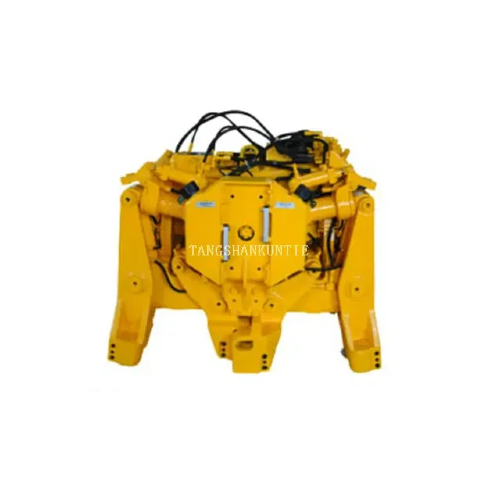
When evaluating long-term track performance, geometry accuracy is only part of the outcome. What truly governs durability is how ballast behaves under traffic loads, water, and temperature cycles. The comparison below presents a structured, engineering-focused view of how the Ballast Regulator and the tamping machine influence track quality across functional, physical, and operational dimensions.
Comparison Aspect | Ballast Regulator | Tamping Machine |
Primary system acted upon | Ballast surface and full cross-section (shoulders, slopes, ballast profile) | Ballast beneath sleepers and track geometry |
Main engineering objective | Ensure drainage capacity, lateral stability, and structural continuity | Restore designed track geometry and positional accuracy |
Drainage performance impact | Shapes ballast slopes typically in the range of 1:1.5–1:2 to form defined water runoff paths; helps limit ballast moisture content (often targeted below ~5–8% by volume, site-verified) | No direct drainage function; drainage effects are indirect and incidental |
Resistance to water damage and frost action | Removes ballast obstructions and prevents water accumulation, reducing frost heave risk in cold regions | Unable to correct surface water retention or drainage deficiencies |
Ballast elasticity under cyclic loading | Maintains uniform ballast distribution, preserving elastic response and reducing long-term settlement | Creates high short-term compaction under sleepers; surface ballast may remain uneven without regulation |
Shoulder strength and lateral resistance | Forms standard shoulder widths (commonly 300–450 mm depending on line class) and shoulder height, improving lateral track resistance | Does not shape shoulders; lateral resistance depends on subsequent ballast regulation |
Track geometry accuracy | Does not correct geometry directly; supports geometry retention over time | Achieves millimeter-level alignment and level correction (typically ±1–2 mm, depending on system and conditions) |
Load distribution characteristics | Improves overall ballast load paths, reducing stress concentration | Establishes uniform sleeper support and balanced vertical load transfer |
Effect on vehicle–track dynamic response | Indirectly lowers long-term dynamic amplification by stabilizing ballast structure | Directly reduces immediate dynamic forces and vibration through geometry correction |
Influence on maintenance intervals | Slows geometry degradation and extends tamping cycles; often acts as a “life extender” | Rapidly restores condition but, alone, offers shorter maintenance intervals |
Typical application scenarios | Post-tamping shaping, ballast cleaning recovery, stabilization of high-speed or heavy-haul lines | Correction of settlement, alignment exceedances, speed-restriction removal |
Contribution to long-term track quality | Determines how long track performance can be maintained | Determines how accurately track performance can be restored |
Tip:On high-traffic or heavy-haul lines, focusing only on tamping accuracy while neglecting ballast regulation often leads to rapid geometry rebound. Treating ballast regulation as a protective layer for geometry results is a proven strategy for reducing life-cycle maintenance costs and extending track service performance.
Ballast Regulator vs Tamping Machine highlights a coordinated maintenance strategy, not a single equipment choice. Tamping restores precise track geometry, while the ballast regulator shapes ballast for drainage and stability. Together, they improve durability, ride quality, and maintenance efficiency. Tangshan Kuntie Technology Co., Ltd. provides advanced ballast regulators and tamping solutions designed to support reliable track performance, helping operators extend asset life and achieve consistent maintenance results.
A: A Ballast Regulator shapes and profiles ballast, while tamping corrects track geometry under sleepers.
A: A Ballast Regulator stabilizes ballast, improves drainage, and protects geometry after tamping.
A: Use a Ballast Regulator when geometry is acceptable but ballast shape or drainage is poor.
A: Tamping sets geometry, and a Ballast Regulator locks it in with proper ballast profiles.
A: Yes, a Ballast Regulator extends geometry life and reduces repeat maintenance costs.


